Volvo VNL is running rough. The engine hesitates when you climb a grade. Cold mornings mean hard starts. The fuel economy has dropped noticeably, and you’re seeing warning lights on the dash. You take it to a shop, run diagnostics, and the mechanic points to one culprit: a clogged fuel filter.
A dirty or restricted fuel filter is one of the most overlooked maintenance items on semi trucks, yet it causes more unexpected breakdowns than most drivers realize. The filter sits quietly between your fuel tank and injectors, doing its job. When it clogs, your engine starves for clean fuel. Power drops. Starting becomes a battle. In worst cases, you’re stranded on the side of the highway calling for a tow.
Replacing a Volvo VNL fuel filter is straightforward work. You don’t need a full shop or expensive equipment. With the right tools, basic knowledge, and about an hour, you can handle this yourself or know exactly what to expect when a technician does it for you.
This guide walks you through the entire process, from locating your filter to firing up the engine after replacement.
What Does a Volvo VNL Fuel Filter Actually Do?
Before you start wrenching, understand what you’re protecting. Your fuel filter does four critical things:
Fuel tanks collect sediment. Fuel suppliers aren’t always pristine. Your filter catches particles before they reach your injectors.
Moisture enters fuel tanks through condensation, contaminated fuel, or poor storage. Water in your fuel system causes corrosion, rust, and injector failure. A quality filter traps it.
Modern diesel injectors are precision instruments. A single grain of sand or water droplet can damage them permanently. A clogged filter prevents that damage and saves you thousands in injector replacement costs.
A restricted filter forces your fuel pump to work harder, raising pressure and potentially damaging the pump itself. A clean filter keeps pressure steady and your pump healthy.
Volvo VNL trucks typically use a two-stage filtration system.
- A primary filter handles the heavy lifting.
- A secondary filter (often a water separator) catches finer particles and water. Understanding both matters when you’re troubleshooting or replacing.
Volvo VNL Fuel Filter Location
This is where many DIYers get stuck. Volvo didn’t put the filter in an obvious spot.
Primary Fuel Filter Location
If you’re driving a Volvo VNL (D11, D13, 670, or 760), the primary filter is typically located on the frame rail or attached to the engine. Exact placement varies by model year and engine configuration.
Look along the driver’s side frame, typically between the rear of the cab and the fuel tank. You’ll see a cylindrical housing, usually black or silver. This is your primary filter assembly. It’s roughly the size of a soda can and has fuel lines running to and from it.
Secondary Fuel Filter and Water Separator
The secondary filter or water separator typically sits closer to the engine, on the cold side of the fuel system. On many Volvo VNL setups, you’ll find a transparent bowl or housing.
This is often a Davco or Parker filter system. The transparent design lets you see fuel condition and water accumulation at a glance.
Davco Filter Bowl Setup
If your truck has a Davco water separator, you’ll notice a clear plastic or acrylic bowl at the bottom. This bowl collects water and sediment. The fuel flows through a cartridge filter element inside the housing above the bowl.
This two-part design is standard on many commercial Volvo VNL trucks because it’s reliable and easy to service.
Signs Your Volvo VNL Fuel Filter Needs Replacement
Your truck will tell you when the fuel filter is struggling. Listen for these warning signs.
Hard starting, especially in cold weather
If your engine cranks longer than usual before firing, the filter may be restricting fuel flow. Cold fuel flows slower anyway, and a partially clogged filter makes it worse.
Engine hesitation or stumbling under load
Climbing a hill shouldn’t feel like a struggle. If your VNL bogs down when you punch the throttle or hit an incline, fuel starvation is likely.
Loss of power or reduced acceleration
You notice you’re not maintaining highway speed without pushing harder on the throttle. The engine feels sluggish.
Poor fuel economy
Your MPG drops noticeably. A restricted filter forces your fuel pump to work harder, using more energy and burning more fuel to compensate.
Check engine light or fuel system warnings
Modern Volvo trucks run diagnostics constantly. A clogged filter triggers pressure sensors and warning lights on your dash.
Water in the fuel bowl
If you have a transparent water separator bowl, look for cloudiness, discoloration, or visible liquid sitting at the bottom. Water means contamination and a filter that’s not doing its job.
Rough idle or stalling
A severely clogged filter can cause the engine to run lean and rough, especially at idle.
If you’re seeing any of these, don’t wait. A fuel filter replacement costs under $200 in most cases. Waiting until you’re stranded costs thousands in towing and lost time.
Tools You’ll Need Before Starting
Gather these items before you get under the truck. Having everything ready means fewer trips to the toolbox and less downtime.
- Filter wrench (specific size for your filter housing, usually 86mm or 90mm)
- Replacement fuel filter cartridge (correct part number for your Volvo model)
- Clean diesel fuel (for priming, if needed)
- Mechanic’s gloves (fuel is messy)
- Drain pan (catch spilled fuel)
- Shop towels or rags (cleanup)
- Socket set and basic wrenches (for any brackets or clamps)
Don’t skip the drain pan. Spilled diesel fuel is an environmental hazard and a safety issue. Contain it.
How to Change Volvo VNL Fuel Filter: Step-by-Step Process
Step 1: Park Safely and Let the Engine Cool
Find a flat, level surface. Turn off the engine and let it cool for at least 15 minutes. Fuel systems under pressure can spray hot fuel. A cool engine is safer to work on. Set the parking brake and chock the wheels if you’re on an incline.
Step 2: Locate Your Fuel Filter Housing
Use the location guide above to find your primary or secondary filter. You may need to remove a plastic cover or splash guard to access it. Take a photo with your phone so you remember how everything sits before you start disassembly.
Step 3: Drain the Water Separator Bowl (If Equipped)
If your truck has a transparent water separator bowl, loosen the drain plug at the bottom. Place your drain pan underneath and let any water or sediment drain out. This prevents debris from entering the fuel system during filter replacement.
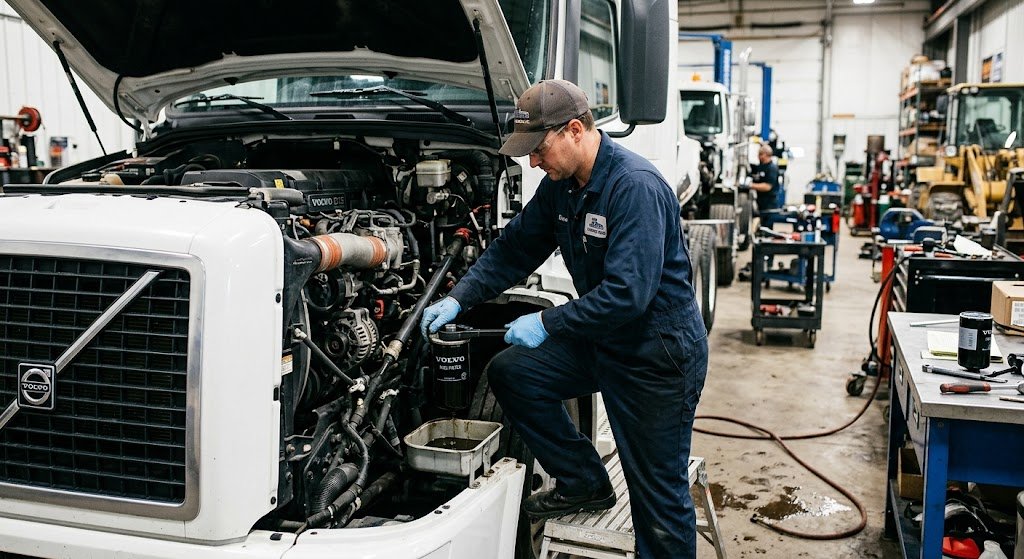
Step 4: Remove the Old Fuel Filter
Using your filter wrench, loosen the filter housing. Turn it counterclockwise until it comes free. Expect some fuel to spill, which is why the drain pan is essential. Carefully remove the old filter cartridge and set it aside. Inspect the housing carefully. Look for cracks, corrosion, or damage. If the housing is damaged, it needs replacement too.
Step 5: Inspect the Housing and Seals
Look inside the filter housing. You’ll see a rubber O-ring seal where the cartridge seats. Check it for cracks, hardening, or damage. If the O-ring looks compromised, replace it. A bad seal causes fuel leaks and air in the fuel system. Wipe the inside of the housing clean with a shop towel. Remove any debris or old filter material.
Step 6: Install the New Fuel Filter
Before installing the new filter, lightly coat the rubber O-ring on the new cartridge with clean diesel fuel. This lubrication ensures a proper seal and makes future removal easier. Don’t use grease or oil, use diesel fuel only.
Hand-tighten the new filter into the housing. Once the O-ring contacts the housing, turn it an additional three-quarter turn. Snug, not gorilla-tight. Over-tightening damages the O-ring and makes removal a nightmare next time.
Step 7: Prime the Fuel System
This step is critical. Air in the fuel lines causes hard starting and rough running.
If your truck has a manual primer pump (a hand-operated bulb on the fuel line), squeeze it repeatedly until you feel resistance and the fuel line firms up. This pushes air out of the system and fills the filter with fuel.
If your truck has an electric fuel pump, turn the ignition to the “on” position without starting the engine. Listen for the fuel pump to run. Let it run for 30 seconds, then turn off the ignition. Repeat this cycle two or three times. This primes the system electrically.
Step 8: Start the Engine and Check for Leaks
Turn the key and start the engine. Let it idle for a minute. Look carefully at the filter housing and all connections for fuel leaks. Wipe the area dry with a towel and look again to confirm no fuel is seeping.
Once you’re confident there are no leaks, rev the engine gently a few times. Listen for any change in running quality. The engine should feel smoother and more responsive than before.
Turn it off, wait a minute, and inspect one more time for leaks. If everything is dry and tight, you’re done.
Common Mistakes That Cause Problems During Volvo FNL Filter Replacement
Installing a dry filter. Some technicians install the new filter without pre-filling it with diesel. This introduces air into the fuel system, causing hard starting and rough running. Always fill the new filter with clean fuel before installation.
- Forgetting to lubricate the O-ring: A dry O-ring doesn’t seal properly. Use a small amount of clean diesel fuel on the rubber ring before installation.
- Over-tightening the filter housing: Crushing the O-ring causes leaks and makes the next replacement a nightmare. Snug is enough. Hand-tight plus three-quarter turn. That’s it.
- Not priming the fuel system: Skipping the primer pump or electric priming step leaves air in the lines. You’ll get hard starts and hesitation until the air works its way out.
- Mixing up filter types: Volvo uses different filter cartridges for different models. Installing the wrong filter causes poor fit and fuel leaks. Double-check your part number before purchasing.
How Often Should You Replace Your Volvo VNL Fuel Filter?
Volvo recommends fuel filter replacement every 15,000 to 25,000 miles under normal operating conditions. Heavy-duty use, poor fuel quality, or frequent short-haul work may require more frequent changes.
If you’re buying fuel from questionable sources or operating in dusty environments, plan on more frequent replacements. Keep records of your service. When you replace a filter, note the mileage and date. This helps you spot patterns and plan ahead.
Volvo VNL: Still Having Fuel Problems After Filter Replacement?
You replaced the filter, primed the system, and the truck still struggles. What now?
Fuel pump failure: If the pump is worn, it won’t maintain proper pressure even with a clean filter. Fuel pressure testing reveals this.
Air in fuel lines: Incomplete priming leaves air pockets. Run the primer pump longer or cycle the ignition multiple times.
Water separator contamination: If water is still present in the separator bowl after filter replacement, you have a deeper fuel contamination issue. The fuel source itself may be compromised.
Fuel injector problems: A severely clogged filter sometimes allows debris to reach injectors before replacement. Damaged injectors need professional service.
Sensor faults: Fuel pressure sensors or temperature sensors may be reading incorrectly, causing false warning lights. These require diagnostic scanning.
If you’re stuck after attempting the replacement, professional help is the right call. Fuel system diagnostics require specialized equipment and training.
Need Help on the Road? Mobile Truck Repair Available
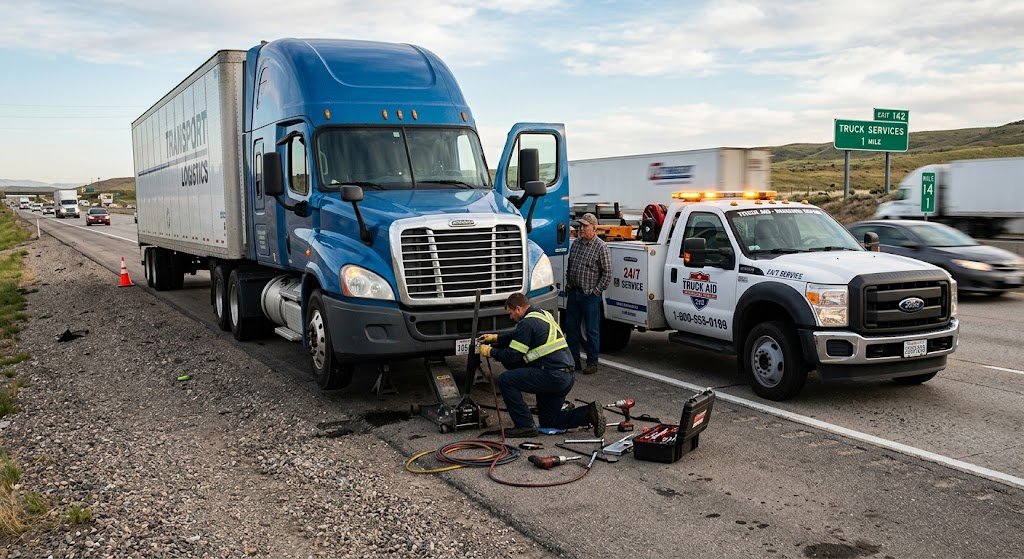
Sometimes a fuel filter replacement isn’t possible at a truck stop or on the shoulder. Maybe you’re in a remote area. Maybe you don’t have the right tools. Maybe the filter is stuck and you need professional extraction.
That’s where mobile truck repair service comes in. Truck N Trailer Roadside brings the repair shop to you. At any time and place, our technicians arrive fully equipped and handle fuel system diagnostics, filter replacements, and fuel pump testing.
We also handle related fuel system work. If your truck needs electrical diagnostics to rule out sensor faults, engine scanning to read fault codes, or cooling system checks to ensure your engine stays healthy, we do that too.
Ready to get your Volvo VNL back to peak performance? Call us at 614 423 6164 for mobile fuel system service, diagnostics, or emergency roadside support. Available 24/7 throughout Columbus and surrounding areas.
FAQs
Where exactly is the Volvo VNL fuel filter located?
The primary fuel filter typically mounts on the frame rail or engine block on the driver’s side. Secondary filters or water separators sit closer to the engine. Exact location varies by model year and engine type.
How do I know if my fuel filter is restricted?
Hard starting, loss of power under load, poor fuel economy, and check engine lights are the most common signs. A fuel pressure gauge reading below 40 PSI at idle also indicates restriction.
Can I drive with a clogged fuel filter?
Not safely. A clogged filter starves your engine and damages your fuel pump. You risk being stranded. Replace it as soon as symptoms appear.
Why does my Volvo VNL lose power when climbing hills?
A clogged fuel filter restricts fuel flow, especially under heavy load. Hills demand more fuel. A restricted filter can’t deliver it fast enough, causing the engine to bog down.
How many fuel filters does a semi truck have?
Most semi trucks have two fuel filters in their diesel engines: a primary filter (pre-filter) and a secondary filter. Each plays a different role in protecting the engine.