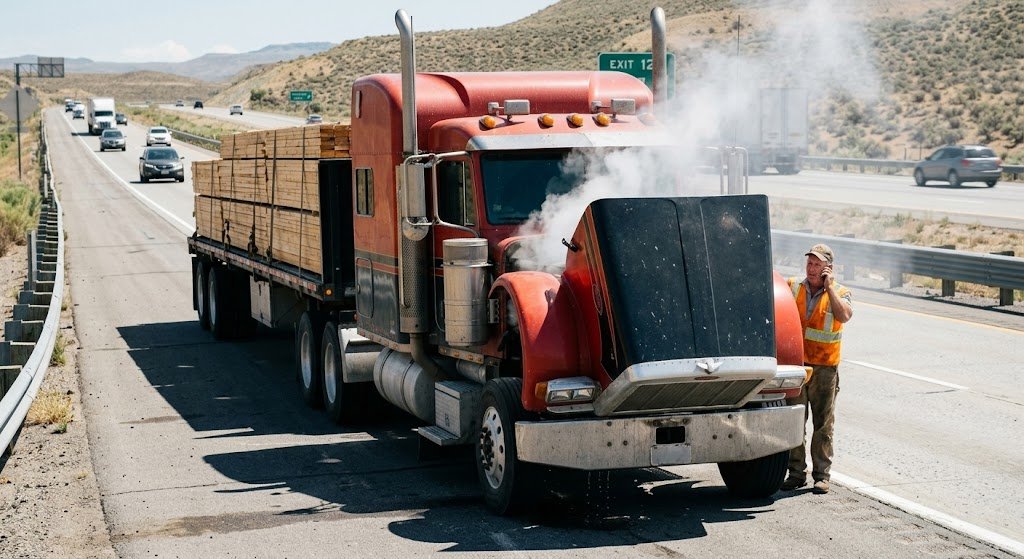
A semi truck overheating problem can go from minor to serious in a matter of minutes. One moment, the truck is running normally, and the next, the temperature gauge is climbing while steam rolls out from under the hood along the side of the highway.
It’s one of the most common breakdown issues in heavy-duty trucking, especially during long hauls, steep grades, heavy traffic, and extreme summer temperatures. Diesel engines naturally generate massive amounts of heat, and the cooling system has to work constantly to keep operating temperatures under control.
In many cases, overheating starts with small warning signs. The engine may run hotter than normal on hills, coolant levels may drop unexpectedly, or warning lights may appear intermittently before a complete breakdown occurs.
Ignoring those signs can lead to costly damage, such as blown head gaskets, cracked components, or complete engine failure. The good news is that most overheating issues are preventable with proper maintenance and early diagnosis before the problem escalates on the road.
In this guide, we break down the seven most common truck engine overheating causes, the warning signs you should never ignore, and how Truck N Trailer Roadside keeps drivers moving with fast, on-site mobile truck repair service across Columbus and beyond.
What Happens When a Semi Truck Overheats on the Highway?
Before looking at the common causes, it helps to understand why overheating becomes such a serious problem for semi trucks.
A diesel engine operates within a specific temperature range between 190°F and 220°F. When temperatures push beyond that window, things go wrong quickly. A semi truck overheating on the highway can escalate in minutes if ignored.
Here’s the chain reaction:
- Coolant boils over, reducing the system’s ability to absorb heat
- Metal engine components expand beyond their tolerances
- Head gaskets can blow, allowing coolant into the cylinders
- Pistons can seize, destroying the engine block entirely
7 Reasons Your Semi Truck Overheats
Understanding the root causes puts you in control. Here are the seven most common reasons your big rig runs hot.
1. Low Coolant Levels
The cooling system relies on a precise volume of coolant to absorb and transfer heat away from the engine. When levels drop, there simply isn’t enough fluid to do the job.
Why coolant levels drop:
- A coolant leak in semi truck radiator hoses, clamps, or fittings
- Slow seepage from a cracked radiator tank
- Evaporation over time due to skipped maintenance intervals
- Overflow caused by a faulty radiator cap that doesn’t hold pressure
Drivers who skip pre-trip coolant checks are rolling the dice every time they hit the highway.
2. Faulty Thermostat
The thermostat acts as a gatekeeper. It stays closed when the engine is cold (allowing it to warm up quickly) and opens once the engine reaches operating temperature, letting coolant flow through the radiator.
When the thermostat gets stuck closed, coolant stops circulating through the engine the way it should. Heat builds with nowhere to go. The engine temperature skyrockets, often without any visible coolant loss. A thermostat is a relatively inexpensive part. Ignoring it can cost you an engine.
3. Radiator Problems
The radiator is the heart of the cooling system. It dissipates heat from the coolant as air flows across its fins. When that process breaks down, overheating follows.
Common radiator failure truck issues include:
- Clogged fins from road debris, dirt, bugs, and mud
- Internal scale buildup that restricts coolant flow
- Bent or damaged fins that reduce airflow
- Cracked tanks or leaking seams
Long-haul trucks operating in dusty or muddy conditions are especially prone to clogged radiators. Regular external cleaning makes a measurable difference.
4. Water Pump Failure
The water pump keeps coolant circulating through the engine and radiator to remove heat. When it starts to fail, coolant flow slows or stops completely, and engine temperatures rise quickly.
Signs of water pump failure diesel truck drivers should watch for:
- Whining or grinding noise from the front of the engine
- Coolant leaking from the pump weep hole
- Wobbling pump pulley
- Rapid temperature increase shortly after starting the engine
A failing water pump often gives warnings before it dies completely. Catching it early saves you from a highway breakdown.
5. Cooling Fan Malfunction
At highway speeds, natural airflow across the radiator handles much of the cooling. At lower speeds, though, the cooling fan becomes much more important, especially during traffic, steep climbs, or slow-moving construction areas.
If the fan clutch fails, the fan motor burns out, or a sensor malfunctions, the fan won’t engage when the engine needs it most. Temperatures climb quickly, especially during hot weather or heavy hauling.
This is a big rig overheating solution that’s often overlooked during routine maintenance.
6. Overloaded Truck and Heavy Haul Stress
Every engine has its limits. When a truck carries more weight than it should, or regularly pulls extremely heavy loads, the engine has to work much harder. That extra strain creates more heat and puts additional pressure on the cooling system.
Situations that amplify heat stress:
- Climbing steep highway grades with a full load
- Extended high-RPM operation in lower gears
- Hot weather combined with heavy cargo
- Towing additional weight beyond recommended specs
The cooling system was engineered for specific operating conditions. Exceeding those conditions consistently wears it down faster.
7. Leaking Hoses or Cooling System Air Trap
Rubber hoses wear down over time. Clamps can loosen, and fittings may start to corrode or crack. Even a small coolant leak can slowly lower coolant levels and allow air into the system, both of which make it harder for the engine to stay cool.
Air trapped in the cooling system creates pockets where coolant can’t flow. These air traps cause inconsistent cooling, hot spots in the engine block, and unpredictable temperature gauge readings.
A small hose leak today will cause a highway breakdown tomorrow.
Warning Signs Before Complete Breakdown
Most trucks show warning signs before overheating turns into a serious breakdown. Some of the most common signs include:
- Temperature gauge climbing past the normal range or bouncing erratically
- Steam or vapor rising from under the hood
- When hot engine components start burning off coolant, a sweet coolant smell can signal a leak.
- Sudden loss of engine power or rough running
- Dashboard warning light illuminating for engine temperature or coolant level
- Coolant pooling under the truck during stops
“Industry maintenance studies from the Technology & Maintenance Council consistently identify cooling system failures as a major contributor to roadside service calls for commercial vehicles.”
What to Do Immediately When Your Truck Overheats?
Don’t panic, but don’t keep driving either. What you do in the next few minutes can save your engine or destroy it.
First, get off the road. Find the widest shoulder you can. Flip your hazards on. If there’s an exit ramp close, take it. A truck stop parking lot beats a highway shoulder every single time.
Just turn off the engine. Every second the engine runs hot, the damage worsens. Shut it down and let it sit.
Now here’s the part most drivers get wrong: do not touch that radiator cap. Seriously. Your cooling system is under heavy pressure when it’s hot. Pop that cap too early, and you’re looking at superheated coolant and steam hitting you right in the face. That’s a burn unit trip nobody wants.
Give it time. At least 30 to 45 minutes. Grab some water, stretch your legs, check your load. Let the engine cool down on its own before you even think about opening anything up.
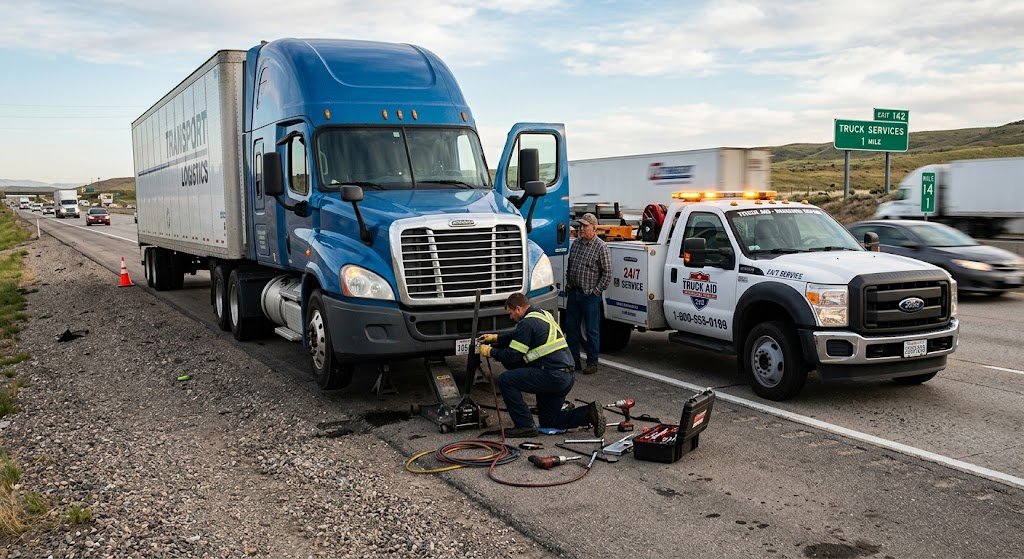
Then make the call. Get a mobile truck repair service on the line. A skilled technician can often diagnose the problem right on the roadside and handle smaller repairs on the spot, helping drivers avoid a tow, long shop delays, and unnecessary downtime.
Why Is Highway Overheating More Dangerous?
Highway breakdowns carry unique risks that make them particularly dangerous:
- High-speed traffic passes just feet from where you’re stopped
- Long uphill stretches push engines to their thermal limits with no relief
- Hot asphalt temperatures can exceed 140°F in summer, radiating heat upward into the engine bay
- Limited roadside assistance options in rural highway stretches mean longer wait times
- Heavy loads can’t be easily relocated, leaving you exposed and vulnerable
“According to the American Trucking Associations, unplanned truck downtime can cost fleets hundreds of dollars per day per vehicle before repair costs are even added.”
How Truck N Trailer Roadside Mobile Truck Repair Helps?
When you’re stuck on the highway with an overheating engine, the last thing you need is a tow to a shop that’s hours away.
Truck N Trailer Roadside brings the shop to you. Our mobile truck repair teams respond fast with fully equipped service vehicles capable of diagnosing and fixing cooling system problems on-site.
Here’s what we handle roadside:
- Coolant system inspection and repair: leak detection, hose replacement, and system refill
- Radiator repair and replacement: clearing clogs, fixing leaks, and restoring airflow
- Thermostat and water pump replacement: getting coolant flowing again
- Cooling fan diagnostics: electrical testing and fan clutch repair
- Full engine diagnostics: scanning fault codes to identify underlying issues
- Emergency roadside assistance: 24/7 availability when you need it most
Our roadside truck repair service eliminates the need for expensive towing and gets you back on the road faster. Whether you’re on the highway, at a loading dock, or in a remote area, our technicians come to your location.
Preventive Maintenance Tips to Prevent Overheating
The cheapest repair is the one you never need. Here’s how to keep your cooling system healthy:
- Check coolant levels during every pre-trip inspection
- Schedule regular mobile inspections with a trusted roadside assistance truck repair provider
- Flush and replace coolant according to your manufacturer’s recommended intervals
- Inspect radiator fins regularly and clean them with compressed air or a gentle water rinse
- Check drive belts for cracks, glazing, or looseness
- Check oil levels and condition regularly, since engine oil also helps reduce heat buildup and dissipate it.
- Replace hoses and clamps at the first engine overheating sign of wear
- Test the thermostat during routine maintenance, especially on trucks with over 300,000 miles
Is Your Truck Ready to Stay Cool on the Road?
A semi truck overheating doesn’t have to end in a catastrophic breakdown. Know the causes. Watch for the warning signs. Maintain your cooling system. And when something does go wrong on the highway, have a reliable mobile truck repair service on speed dial.
Truck N Trailer Roadside is available 24/7, providing fast on-site cooling system repair and roadside assistance. Don’t wait for a breakdown to find a solution.
Contact Truck N Trailer Roadside now and keep your truck running cool after the mile.
FAQs
Why does my semi truck overheat only on highways?
Highway driving demands sustained high RPM, heavy loads, and extended operation without rest. Combined with hot weather and steep grades, your cooling system faces more stress than in city driving. A component that barely functions at low speeds can completely fail under highway conditions.
Can I drive a semi truck while overheating?
No. Driving while overheating causes rapid, compounding damage, warped heads, blown gaskets, scored cylinders, and potential engine seizure. Pull over immediately, shut down the engine, and call for help.
What is the fastest fix for truck overheating?
It depends on the cause. Low coolant can be topped off in minutes. A thermostat stuck truck or broken fan belt can be replaced roadside in under an hour. A mobile truck repair service can diagnose the issue on-site and provide the fastest path back to the road.
Is mobile truck repair available on highways?
Yes. Services like Truck N Trailer Roadside provide 24/7 mobile truck repair directly on highway shoulders, rest stops, and truck stops. Our technicians come equipped with tools and common parts to handle most cooling system repairs on the spot.
What are the first signs that a semi truck is overheating?
Usually, the temperature gauge starts climbing higher than normal first. Drivers may also notice steam under the hood, coolant leaking, warning lights on the dash, or the truck struggling more than usual on hills. In some cases, there’s also a sweet smell from leaking coolant getting hot inside the engine area.