
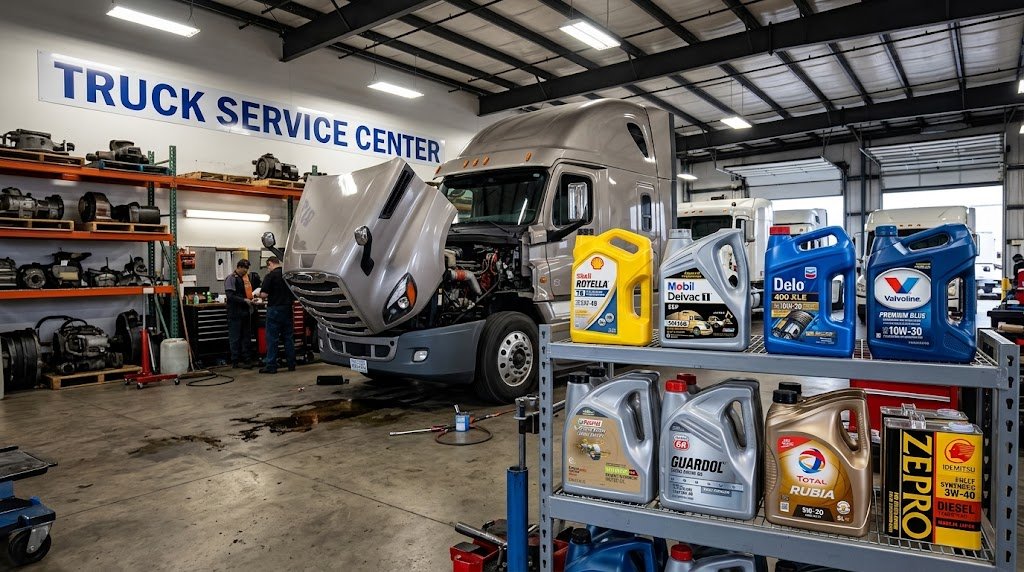
A diesel engine works hard every day, and the oil inside it has to work just as hard. The right semi truck engine oil helps control temperature, protect moving parts, and support longer engine life, while the wrong oil can lead to faster wear and costly problems. This guide covers 15 best semi truck engine oil in 2026 and how smart maintenance supports better performance.
How Engine Oil Works in Heavy-Duty Diesel Trucks
Engine oil in a semi truck does more than lubricate moving parts. It also helps reduce wear, control heat, handle soot, and keep the engine cleaner during long hours on the road. Because diesel engines work harder than regular passenger vehicles, they need oil that can hold up under heavier loads and higher temperatures.
That is also why the right oil specification and viscosity matter. Semi truck engine oil temperature often runs around 200°F to 245°F under normal operating conditions, so the oil has to stay stable and protect the engine even under heat and stress.
What to look for in the best semi truck engine oil?
The best engine oil for semi trucks depends on the engine, climate, duty cycle, and drain interval.
API category
Most newer semi trucks use oil that meets API CK-4. Some engines can also use FA-4, which may help with fuel economy, but not every engine is approved for it.
Viscosity grade
Common grades include 15W-40, 10W-30, and 5W-40. The right grade depends on the engine and the operating conditions. Some trucks do well with 10W-30 or 15W-40, while synthetic oils can help in very cold or very hot weather.
Synthetic vs blend vs conventional
Full synthetic oil usually offers better cold-start protection and can support longer drain intervals. Synthetic blends can be a good middle option for fleets that want performance and value. Conventional oils are still used, but many fleets now choose synthetic or blend options for better protection.
OEM approvals
Always check what the engine maker requires. This is one of the most important steps. Some Cummins engines require CES 20086 (CK-4), while many Volvo engines require VDS-4 or VDS-4.5.
Best Semi Truck Engine Oil Picks for 2026
Below are strong current options based on official product pages and OEM relevance.
1. Shell Rotella T6 Full Synthetic 5W-40
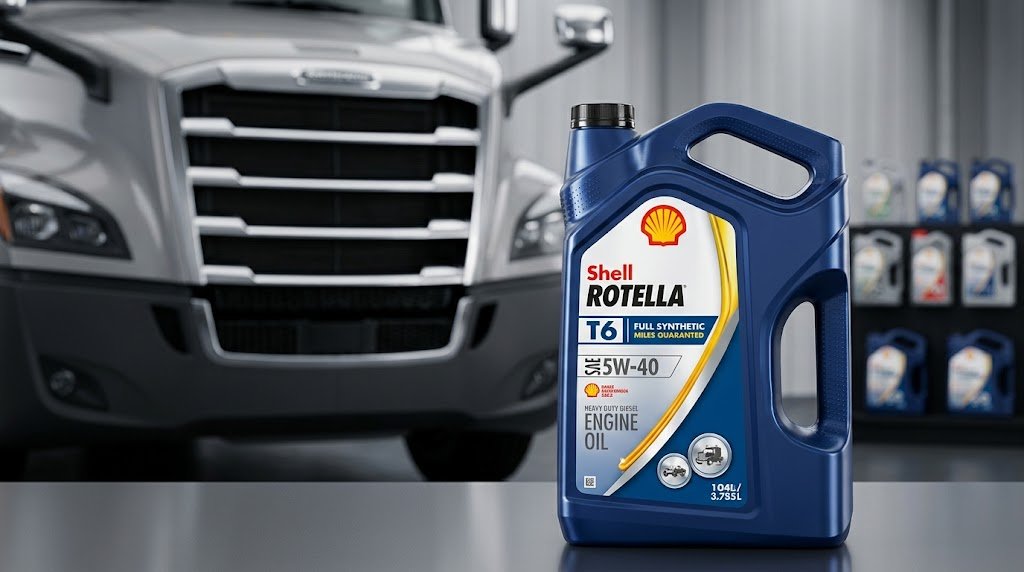
Shell Rotella T6 is one of the most recognized names in heavy-duty diesel lubrication, and for good reason. This full synthetic 5W-40 is built to handle the kind of stress that long-haul diesel engines face every day. Its low-ash formulation helps protect diesel particulate filters, making it well-suited for trucks running modern emission systems.
Where T6 stands out is cold-weather startup. The 5W-40 grade flows easily at low temperatures, meaning engine components get lubrication within seconds of ignition rather than waiting for a heavier oil to thin out. At the high end, the synthetic base resists thermal breakdown, keeping a consistent film between metal surfaces even when the engine is working hard on a loaded climb.
Shell backs T6 with API CK-4 certification and a range of OEM approvals that include Cummins CES 20086, Volvo VDS-4.5, Detroit Diesel DFS 93K222, and Mack EOS-4.5. That broad approval coverage makes it a practical default for mixed fleets that run multiple engine brands.
Best for: Fleets operating in variable climates or needing a single oil across different engine brands.
Pros
- Strong cold-start protection due to 5W-40 grade
- Low-ash formula supports DPF health
- Broad OEM approval coverage for mixed fleets
Cons
- Higher cost per gallon compared to synthetic blends
- 5W-40 may not be the optimal grade for all engines; always verify with the OEM manual
| Specification | Details |
| Viscosity Grade | 5W-40 |
| Oil Type | Full Synthetic |
| API Rating | CK-4 |
| Key OEM Approvals | Cummins CES 20086, Volvo VDS-4.5, Mack EOS-4.5, Detroit Diesel DFS 93K222 |
| Best Use Case | Cold climates, mixed fleets, DPF-equipped engines |
2. Mobil Delvac 1 ESP 5W-40
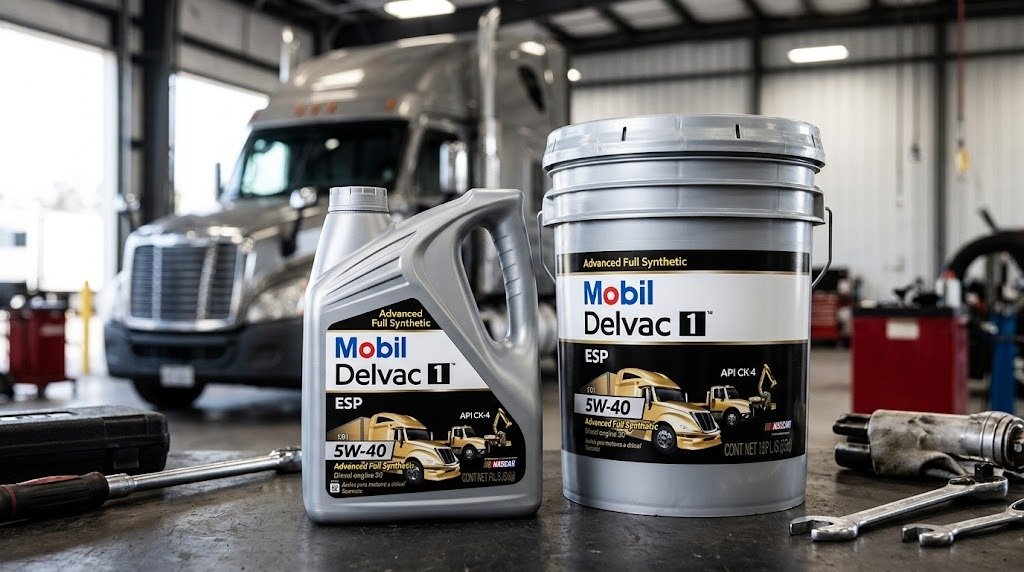
Mobil Delvac 1 ESP is a premium full synthetic designed specifically for extended drain capability in heavy-duty diesel engines. The “ESP” designation stands for Extended Service Performance, which signals its focus on pushing drain intervals further than conventional or standard synthetic oils allow. For high-mileage fleets trying to reduce the frequency and cost of oil changes, that is a meaningful advantage.
The formulation uses ExxonMobil’s proprietary base stock technology combined with a robust additive system that resists oxidation and soot-induced viscosity increase. Diesel engines produce significant soot during combustion, and oil that cannot handle soot contamination will thicken prematurely, reducing its ability to flow and protect. Delvac 1 ESP manages soot loading effectively across long service periods.
It meets API CK-4 and carries approvals from Cummins, Volvo, Mercedes-Benz, and others. Mobil also highlights its fuel economy contribution under the right conditions, particularly relevant for fleets tracking cost per mile.
Best for: High-mileage long-haul trucks where extended drain intervals are a fleet priority.
Pros
- Engineered for extended drain applications
- Handles soot loading well over long service periods
- Broad manufacturer approvals including European engine makers
Cons
- Premium pricing reflects extended-drain positioning
- Drain interval extensions should only be followed if the engine OEM also permits them
| Specification | Details |
| Viscosity Grade | 5W-40 |
| Oil Type | Full Synthetic |
| API Rating | CK-4 |
| Key OEM Approvals | Cummins CES 20086, Volvo VDS-4.5, Mercedes-Benz 228.31 |
| Best Use Case | Long-haul fleets, extended drain programs |
3. Chevron Delo 400 XLE Synthetic Blend 10W-30
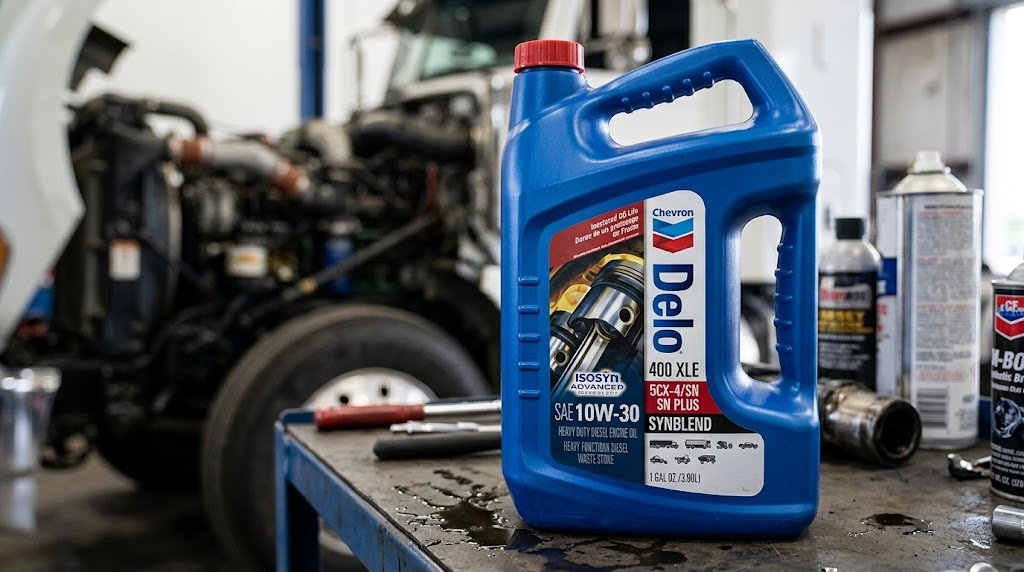
Chevron Delo 400 XLE occupies a smart middle ground for fleet operators who want better protection than conventional oil without paying full synthetic prices. The synthetic blend formulation improves oxidation resistance and provides more stable viscosity across temperature swings compared to straight mineral oil, while keeping acquisition costs manageable.
The 10W-30 viscosity grade is a common choice for fleets trying to pick up modest fuel efficiency gains without deviating from OEM guidelines. It flows more easily than 15W-40 at lower temperatures and under lighter loads, reducing the energy the engine uses to pump oil through its passages. Chevron notes that the XLE line is designed with extended drain capability in mind, which can reduce service frequency for fleets that track oil condition closely.
Delo 400 XLE meets API CK-4 and carries a solid range of OEM approvals, including Cummins CES 20086 and Mack EOS-4.5. It is a strong everyday option for regional and vocational fleets that run mixed cycles.
Best for: Cost-conscious fleets wanting improved protection over conventional oil without full synthetic pricing.
Pros
- Synthetic blend technology improves oxidation resistance over mineral oil
- 10W-30 grade can support modest fuel economy benefits
- Extended drain design reduces service frequency
Cons
- Not a full synthetic, so drain interval capability is more limited than T6 or Delvac 1 ESP
- Verify 10W-30 approval with specific engine OEM before use
| Specification | Details |
| Viscosity Grade | 10W-30 |
| Oil Type | Synthetic Blend |
| API Rating | CK-4 |
| Key OEM Approvals | Cummins CES 20086, Mack EOS-4.5 |
| Best Use Case | Regional fleets, mixed duty cycles, budget-conscious operators |
4. Chevron Delo 600 ADF Ultra Low Ash 10W-30
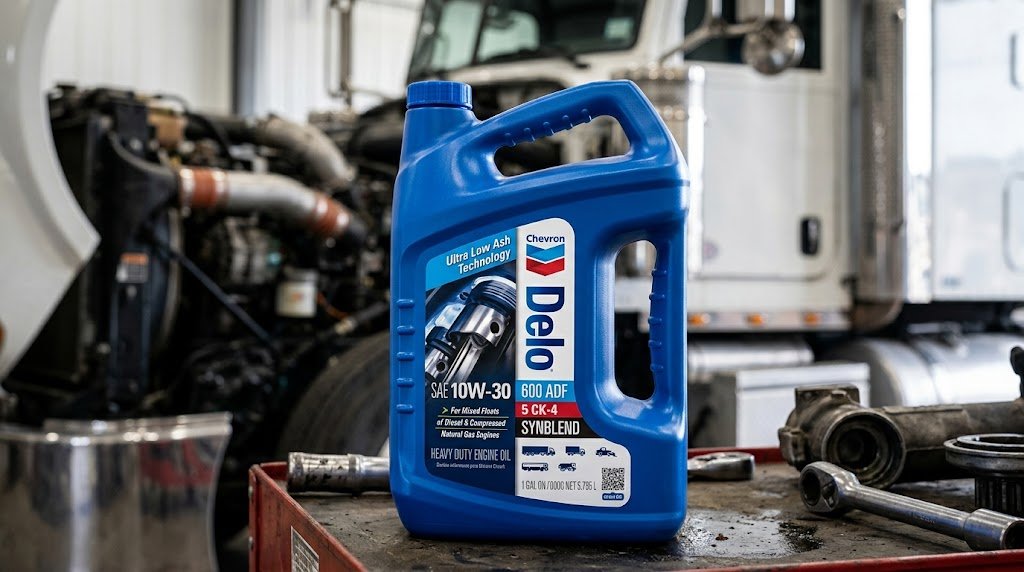
Chevron Delo 600 ADF is built around one specific challenge that modern diesel trucks face: keeping diesel particulate filters clean and functional for as long as possible. ADF stands for Advanced DPF Formula, and the entire product is engineered to minimize the ash that accumulates inside the DPF during normal operation. Ash cannot be burned off during regeneration cycles the way soot can. It builds up permanently and eventually requires a manual DPF cleaning or replacement.
By reducing the ash-contributing compounds in the oil formulation, Delo 600 ADF extends the interval between DPF cleanings, which is a meaningful cost and downtime reduction for trucks covering heavy annual mileage. Chevron has published data showing significant DPF ash reduction compared to standard CK-4 oils, which translates to longer DPF service life in the field.
Delo 600 ADF 10W-30 is formulated to meet API CK-4. The FA-4 designation applies to a separate, distinct product variant, not this grade. Confirm which specification your engine requires before ordering, and never assume CK-4 and FA-4 products are interchangeable even when viscosity grades look the same.
Best for: Trucks with active DPF systems, particularly those running high annual mileage where DPF maintenance costs add up.
Pros
- Ultra-low ash formula directly extends DPF service life
- Reduces frequency and cost of DPF cleanings
- Available in both CK-4 and FA-4 variants to match different engine requirements
Cons
- More specialized than general-purpose CK-4 oils
- Carries a higher price point reflecting its advanced formulation
| Specification | Details |
| Viscosity Grade | 10W-30 |
| Oil Type | Full Synthetic |
| API Rating | CK-4 (this grade) |
| Primary Benefit | Advanced DPF protection through ultra-low ash formulation |
| Best Use Case | High-mileage trucks with DPF systems, emissions-sensitive fleets |
5. Valvoline Premium Blue 8600 ES 10W-30
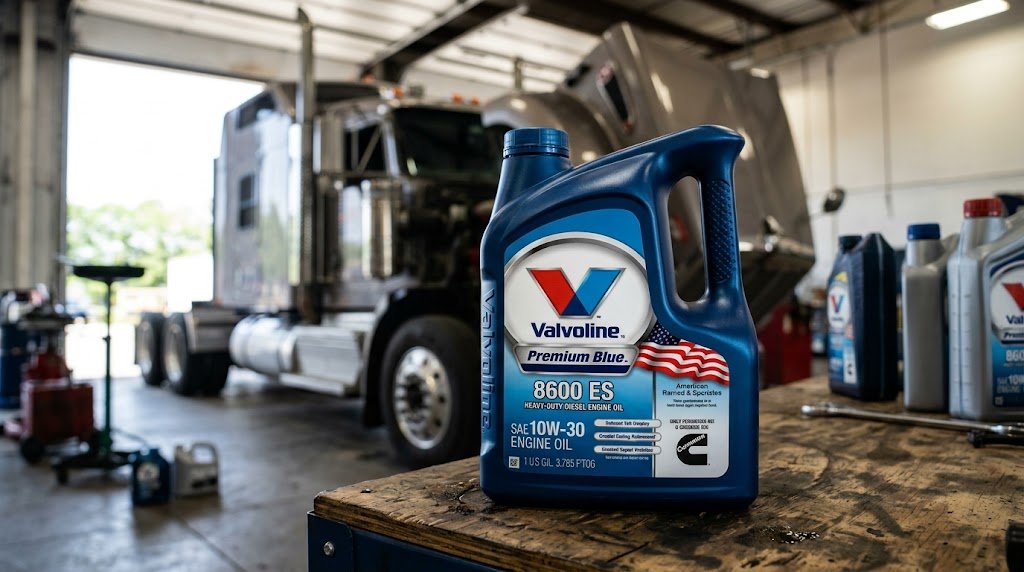
Valvoline Premium Blue has a long history of co-development with Cummins, and the 8600 ES continues that relationship. For fleets running Cummins-powered trucks, this oil carries the Cummins CES 20086 approval that Cummins requires for warranty and service compliance on many of its current engines. That approval is not a formality; it reflects testing and validation specific to Cummins engine designs.
The 8600 ES uses a synthetic blend formulation focused on soot handling, wear control, and oxidation stability across demanding duty cycles. Cummins engines in long-haul and vocational applications generate significant combustion byproducts, and this oil is engineered to manage that contamination over extended service intervals. Valvoline positions it specifically for fleets that want extended drain capability while maintaining Cummins compliance.
It also meets API CK-4, which keeps it usable across other engine brands in mixed fleets, giving it flexibility beyond a pure Cummins-only role.
Best for: Cummins-powered fleets, especially those requiring specific Cummins CES approval for warranty compliance.
Pros
- Carries Cummins CES 20086 approval; important for warranty-sensitive operations
- Synthetic blend formulation handles soot and oxidation in high-demand cycles
- Extended service interval capability reduces maintenance frequency
Cons
- Slightly more expensive than general-market synthetics
- Best value is realized in Cummins applications specifically
| Specification | Details |
| Viscosity Grade | 10W-30 |
| Oil Type | Synthetic blend |
| API Rating | CK-4 |
| Key OEM Approvals | Cummins CES 20086 |
| Best Use Case | Cummins-powered trucks, warranty-sensitive fleet operations |
6. Volvo-Approved VDS-4.5 Engine Oil (10W-30 or 15W-40)
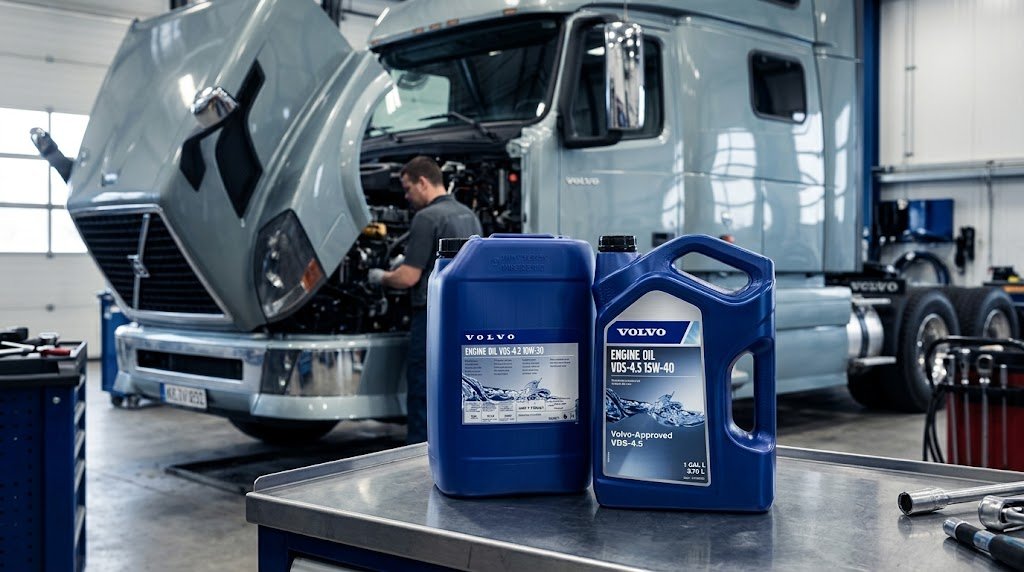
Volvo’s VDS-4.5 specification is the current standard required by Volvo Trucks for many of its engine platforms, including the D13: one of the most widely used heavy-duty highway engines in North America. VDS-4.5 is a demanding internal spec that goes beyond what API CK-4 alone requires, covering additional criteria for soot handling, and long-drain performance that Volvo has validated specifically for its engine designs.
Using an oil that carries the Volvo VDS-4.5 approval is not optional for fleets concerned about warranty compliance and recommended service intervals. Volvo-approved oils in both 10W-30 and 15W-40 viscosity grades are available from multiple suppliers, including Shell, ExxonMobil, and Castrol, all of whom produce oils that have passed Volvo’s testing protocol.
For fleets running Volvo-powered trucks, verifying VDS-4.5 approval on the oil datasheet before purchase is one of the most important maintenance decisions in the service cycle.
Best for: Volvo-powered trucks, particularly D13 highway engines, where VDS-4.5 compliance is required.
Pros
- Meets Volvo’s own internal specification beyond API CK-4
- Available from multiple major oil suppliers in common viscosity grades
- Supports extended drain intervals as intended by Volvo
Cons
- Volvo-approved products can carry a price premium
- Not all oils labeled CK-4 carry VDS-4.5; must verify the specific product datasheet
| Specification | Details |
| Viscosity Grade | 10W-30 or 15W-40 |
| Oil Type | Full Synthetic or Synthetic Blend (supplier dependent) |
| Required Specification | Volvo VDS-4.5 |
| Applicable Engines | Volvo D13, D11, and other current Volvo platforms |
| Best Use Case | Volvo-powered fleets requiring OEM spec compliance |
7. Shell Rotella T5 Synthetic Blend 15W-40
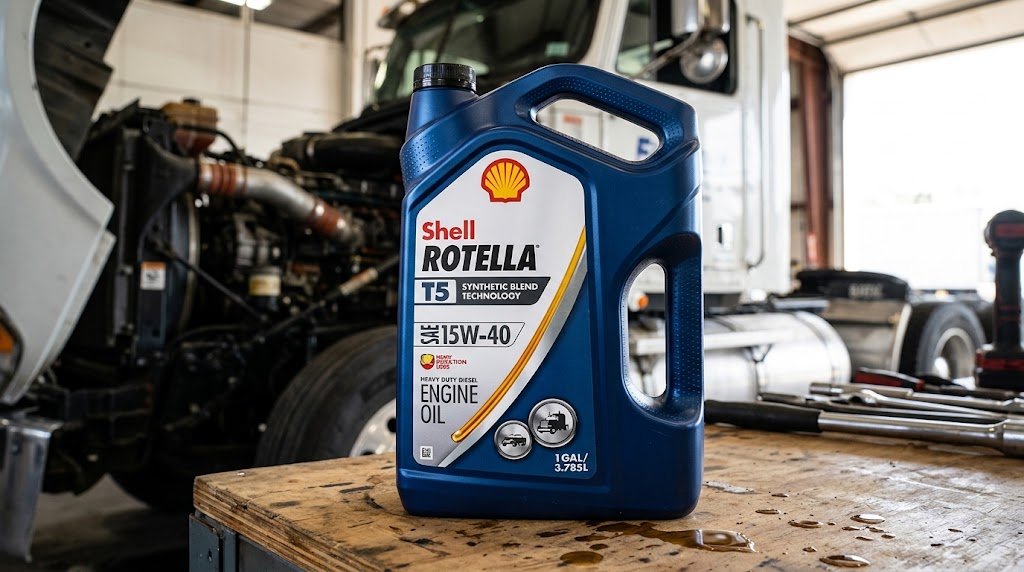
Shell Rotella T5 fills the space between the more affordable T4 conventional oil and the premium T6 full synthetic. For fleets that want meaningfully better protection than straight mineral oil provides, particularly in oxidation resistance and soot management, without moving to a full synthetic budget, T5 represents a practical upgrade.
The 15W-40 viscosity grade is the most familiar heavy-duty diesel weight in the industry, and T5 in this grade meets the expectations that fleet operators have built around it over decades. It handles heat well, resists viscosity breakdown during long driving shifts, and keeps engine parts protected at the operating temperatures typical of a loaded highway truck.
T5 meets API CK-4 and carries a wide range of OEM approvals, including Caterpillar, Cummins, Mack, and Volvo. Shell also backs it with an extended warranty covering up to 10 years or 300,000 miles when used exclusively, which signals confidence in its long-term protection capability.
Best for: Fleets transitioning away from conventional oil that want a cost-effective synthetic blend with broad compatibility.
Pros
- Synthetic blend improves oxidation resistance over mineral-based 15W-40
- Familiar 15W-40 grade with wide OEM approval coverage
- Shell’s extended warranty provides added peace of mind
Cons
- Does not offer the full cold-weather or extended-drain performance of T6
- Not the best choice for engines specifically requiring low-ash formulations
| Specification | Details |
| Viscosity Grade | 15W-40 |
| Oil Type | Synthetic Blend |
| API Rating | CK-4 |
| Key OEM Approvals | Cummins CES 20086, Volvo VDS-4.5, Mack EOS-4.5, Caterpillar ECF-3 |
| Best Use Case | General fleet use, engines suited to 15W-40 synthetic blend |
8. Mobil Delvac MX 15W-40
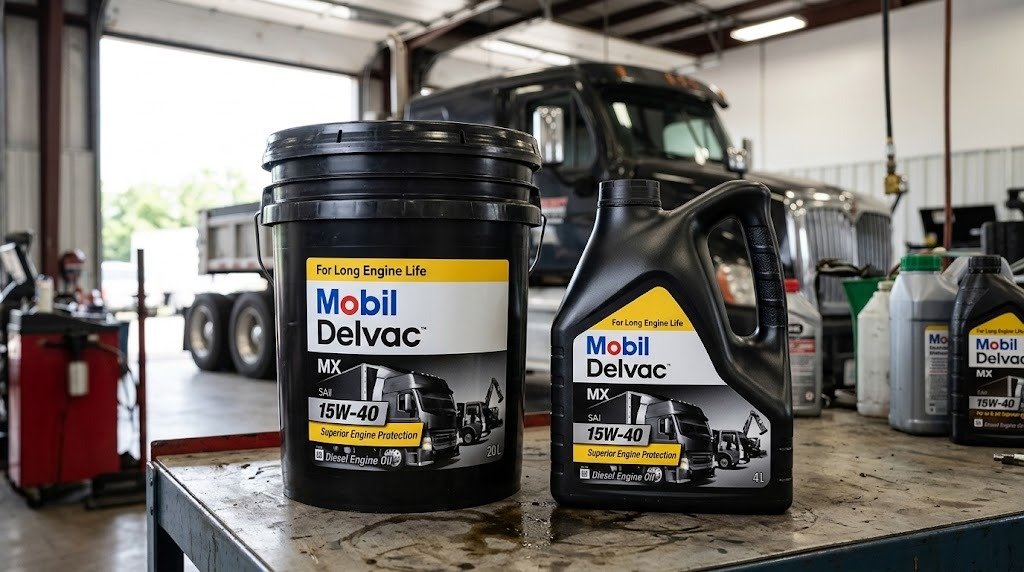
Mobil Delvac MX is a conventional 15W-40 that remains a reliable choice for fleets running older engine platforms or operations where cost per gallon is the primary driver. Not every engine in a fleet is new, and not every duty cycle demands a premium synthetic. For older trucks running engines that predate the most recent API standards, or for fleets with short drain intervals where extended drain capability has no value, Delvac MX delivers consistent, dependable protection.
The formulation is built on high-quality mineral base stocks with an additive package designed for diesel engine wear control, deposit prevention, and corrosion protection. It meets API CK-4, which means it is current-generation compliant even at a conventional price point.
Delvac MX is widely available in bulk formats, making it practical for large fleet operations that purchase oil in drums or totes and manage their own oil storage and dispensing.
Best for: Older engines, fleets with short drain intervals, or operations where volume pricing is more important than extended drain capability.
Pros
- Lower cost per gallon than synthetic and synthetic blend alternatives
- Widely available in bulk formats for large fleet operations
- Meets current API CK-4 standard
Cons
- Conventional base stock offers less oxidation resistance than synthetic formulations
- Not suitable for extended drain programs
- Less effective cold-weather performance than synthetic grades
| Specification | Details |
| Viscosity Grade | 15W-40 |
| Oil Type | Conventional |
| API Rating | CK-4 |
| Best Use Case | Older engines, fleets with short drain intervals, high-volume purchasers |
9. Castrol Vecton Long Drain 10W-30 / 10W-40
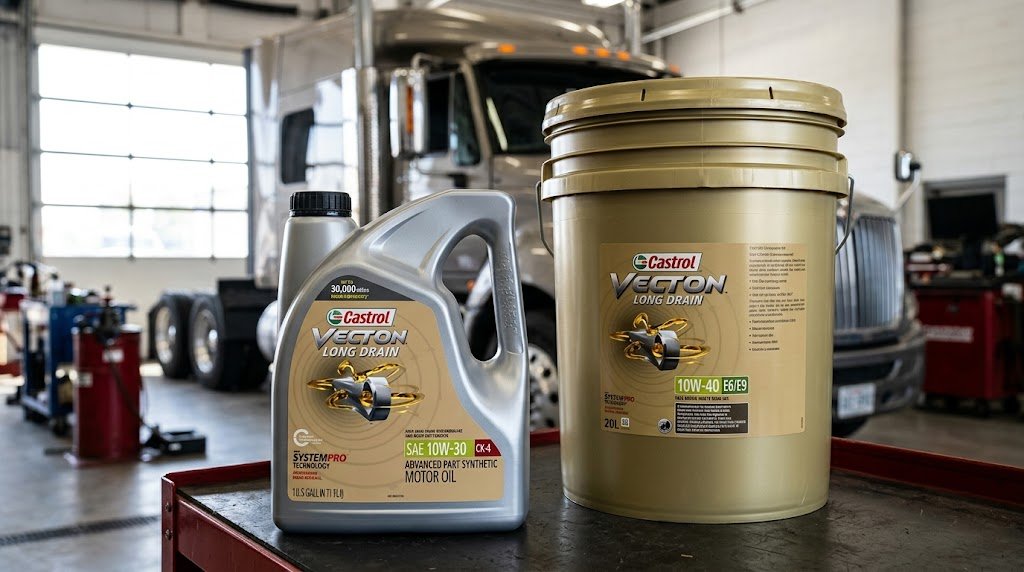
Castrol Vecton Long Drain is engineered specifically around System 5 Technology, Castrol’s approach to actively managing oil degradation over an extended service period. Rather than simply slowing breakdown, the formulation is designed to adapt as contamination and heat exposure accumulate, maintaining a stable protective film even as the oil ages through a long drain interval.
For fleets that have moved to condition-based oil monitoring rather than fixed-mileage drain schedules, Vecton Long Drain supports that approach. The oil maintains stable viscosity and film strength well into its service life, which means oil condition sensors and sampling programs have more room to work with before the oil needs to be changed.
Castrol Vecton meets the API CK-4 standard and carries OEM approvals relevant to major engine platforms in highway trucking. It is a particularly strong fit for European-spec trucks operating in North America, given Castrol’s strong presence in European OEM approval programs.
Best for: Fleets running condition-based oil monitoring programs or operating trucks with European engine specifications.
Pros
- System Pro Technology maintains protective performance over extended drain periods
- Works well with condition-based monitoring and oil sampling programs
- Strong OEM approval coverage including European manufacturers
Cons
- Less commonly stocked at rural truck stops than Shell Rotella or Mobil Delvac
- Higher price point reflects extended-drain positioning
| Specification | Details |
| Viscosity Grade | 10W-30 / 10W-40 |
| Oil Type | Part Synthetic |
| API Rating | CK-4 |
| Key Technology | System Pro Technology |
| Best Use Case | Condition-based drain programs, European engine platforms |
10. Petro-Canada DURON-E Synthetic 10W-40
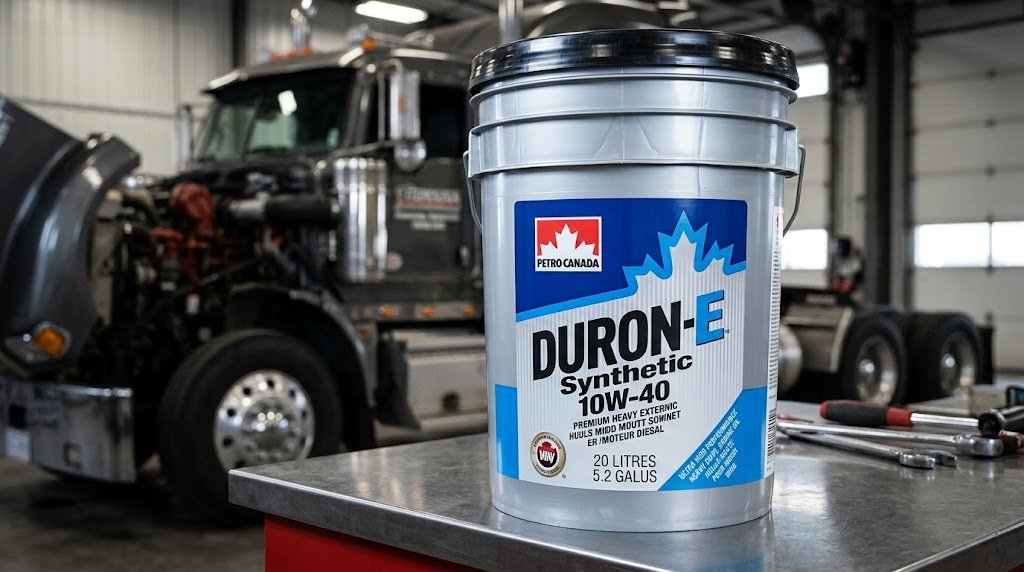
Petro-Canada DURON-E Synthetic is a Canadian-made heavy-duty engine oil that has built a strong reputation in North American trucking, particularly in colder climates where low-temperature performance matters most. The 10W-40 viscosity grade offers a useful combination, better cold-weather flow than a 15W-40 while still providing the high-temperature film strength that a loaded diesel engine needs during summer operation.
DURON-E Synthetic uses Petro-Canada’s HT purity process base stocks, which the company describes as among the cleanest available in the industry. Cleaner base stocks mean a better starting point for the additive package to work with, contributing to more consistent performance across the oil’s service life.
It meets API CK-4 and carries approvals from Cummins, Detroit Diesel, Mack, and others. For fleets operating in Canada or the northern United States where seasonal temperature extremes are a real maintenance factor, DURON-E Synthetic is worth serious consideration.
Best for: Cold-climate operations, northern fleets, and engines that benefit from the 10W-40 viscosity range.
Pros
- Excellent low-temperature flow for cold-climate startups
- High-purity base stock supports stable additive performance
- Recognized OEM approvals across major North American diesel engines
Cons
- Less widely distributed in the southern US compared to Shell or Mobil products
- 10W-40 grade may not align with all OEM viscosity requirements; verify before use
| Specification | Details |
| Viscosity Grade | 10W-40 |
| Oil Type | Full Synthetic |
| API Rating | CK-4 |
| Key OEM Approvals | Cummins CES 20086, Detroit Diesel DFS 93K222, Mack EOS-4.5 |
| Best Use Case | Cold-climate fleets, northern operations |
11. ExxonMobil Mobil Delvac Modern 15W-40 Full Protection
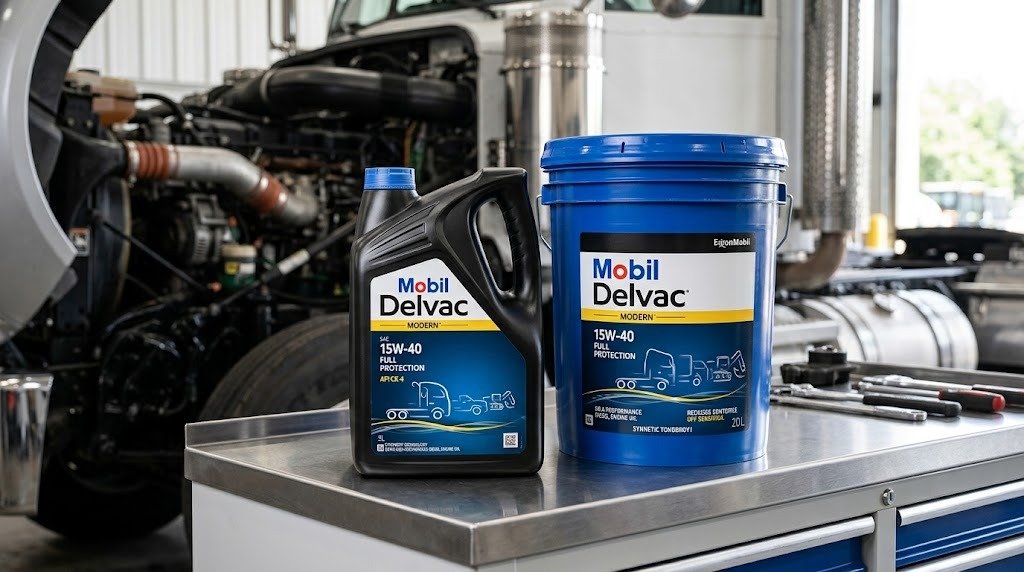
Mobil Delvac Modern Full Protection is positioned as a high-mileage, full-synthetic upgrade for fleets running classic 15W-40 applications but wanting better long-term wear control. It targets the large segment of the fleet market that is comfortable with 15W-40 from years of conventional use but is ready to move to a synthetic technology in that same grade.
The synthetic technology base provides better resistance to oxidative thickening and shear degradation compared to conventional or blend alternatives in the same viscosity grade. This translates to oil that stays closer to its original viscosity and maintains its protective film more consistently through a long service interval.
ExxonMobil has developed the Mobil Delvac Modern line with fleet total cost of ownership in mind, emphasizing wear protection and drain interval potential rather than competing on upfront price alone.
Best for: Fleets currently using conventional 15W-40 who want a synthetic upgrade without changing viscosity grades.
Pros
- Synthetic technology in familiar 15W-40 grade; minimal transition friction for fleets
- Better oxidation and shear stability than conventional 15W-40
- Strong ExxonMobil distribution network for consistent availability
Cons
- Priced above conventional 15W-40 alternatives
- Does not offer the cold-start advantages of a 5W-40 synthetic
| Specification | Details |
| Viscosity Grade | 15W-40 |
| Oil Type | Synthetic Technology |
| API Rating | CK-4 |
| Key OEM Approvals | Cummins CES 20086, Mack EOS-4.5, Volvo VDS-4.5 |
| Best Use Case | Fleets upgrading from conventional 15W-40 to synthetic protection |
12. Citgo Mystik JT-8 Multi-Vehicle Fleet 15W-40
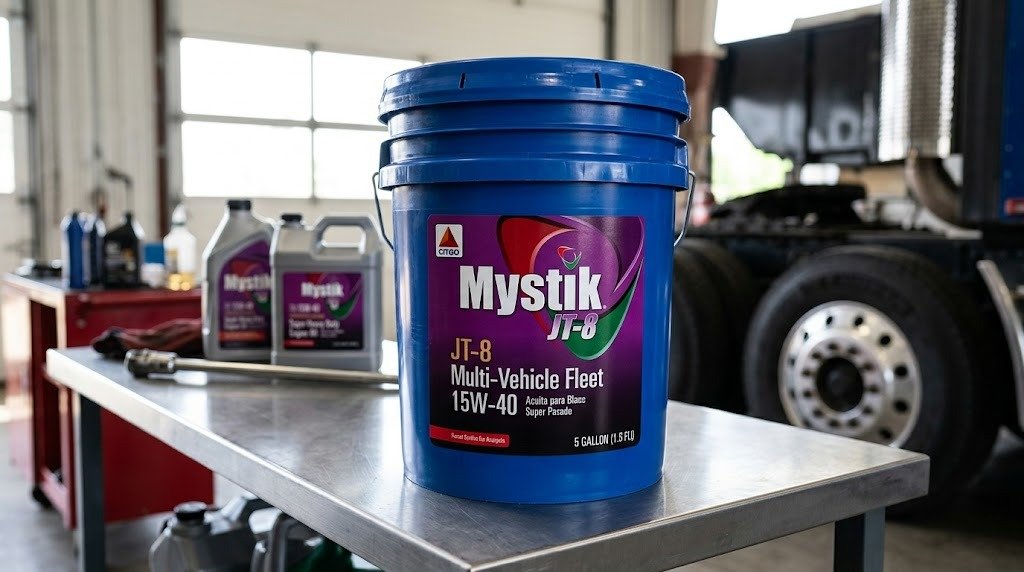
Citgo Mystik JT-8 is engineered for mixed-fleet simplicity. Fleets that run trucks from multiple manufacturers using engines from Cummins, PACCAR, Detroit, and Volvo all face the same challenge: maintaining a single oil stock that satisfies every engine requirement without exceptions. JT-8 is formulated with that challenge specifically in mind.
The oil meets API CK-4 and carries a wide range of OEM approvals covering the major engine families used in North American heavy trucking. Citgo designed the additive package to meet the varying requirements of these different engine platforms simultaneously, reducing the risk of using an incompatible product during a field maintenance event.
It is available in bulk formats and through fleet supply channels, which supports consistent availability for operations that need reliable sourcing.
Best for: Mixed fleets running multiple engine brands who need one oil stock to cover the full range.
Pros
- Broad OEM approval coverage across major North American diesel engine families
- Simplifies oil inventory management for mixed fleets
- Available through fleet supply channels in bulk formats
Cons
- Not a specialized extended-drain or low-ash product; straightforward protection is the focus
- Less prominent in consumer retail, primarily a fleet-channel product
| Specification | Details |
| Viscosity Grade | 15W-40 |
| Oil Type | Synthetic Blend |
| API Rating | CK-4 |
| Key OEM Approvals | Cummins CES 20086, Detroit Diesel DFS 93K222, Mack EOS-4.5 |
| Best Use Case | Mixed fleets, multi-brand engine environments |
13. Total Rubia TIR 9200 FE 5W-30
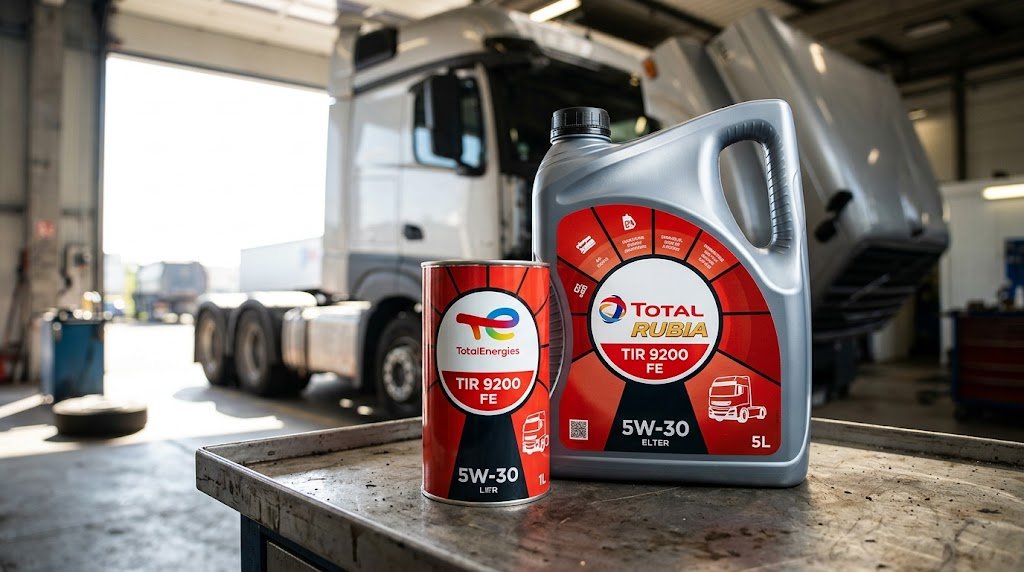
Total Rubia TIR 9200 FE is the right choice when fuel economy is a documented fleet priority. The 5W-30 grade reduces internal friction compared to heavier viscosity oils, and Total formulates Rubia TIR 9200 FE to deliver measurable fuel consumption improvements in qualifying engines without compromising wear protection.
This type of oil is not for every truck. Low-viscosity fuel economy oils only make sense where the engine OEM has explicitly approved them, typically newer platform engines designed with tighter manufacturing tolerances that allow them to operate safely with a thinner film. Running this oil in an engine that requires 15W-40 or 10W-30 is not appropriate.
Best for: Fleets with engines actively pursuing fuel economy improvements.
Pros
- Lower viscosity reduces internal friction and supports fuel savings
- Formulated for modern diesel platforms
- Total’s Rubia line has strong coverage across European and North American engines
Cons
- Less widely distributed in North America compared to Shell or Mobil products
| Specification | Details |
| Viscosity Grade | 5W-30 |
| Oil Type | Full Synthetic |
| Performance Level | ACEA E4/E7 |
| Primary Benefit | Fuel economy improvement in approved low-viscosity applications |
| Best Use Case | Engines in fleets targeting fuel cost reduction |
14. Phillips 66 Guardol ECT 15W-40
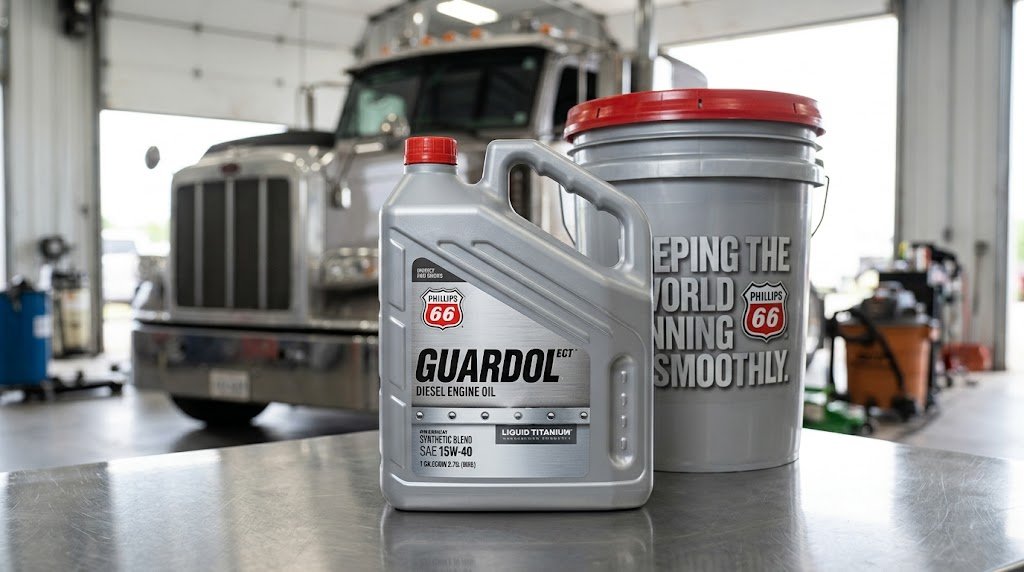
Phillips 66 Guardol ECT is a field-proven heavy-duty diesel oil with a long track record in North American trucking. The ECT designation reflects its Enhanced Controlled Technology additive system, which is designed to deliver stable performance through demanding service conditions including high heat, sustained load, and extended drain use.
Guardol ECT meets API CK-4 and has accumulated OEM approvals across the major diesel engine families used in highway and vocational trucking. Phillips 66 distributes this product through a broad network of fuel and fleet supply outlets, which makes it accessible for owner-operators and smaller fleets that purchase oil through truck stops and regional distributors rather than direct fleet contracts.
For operators who need a trusted, broadly compatible 15W-40 with a strong approval base and consistent availability through conventional supply channels, Guardol ECT is a reliable choice.
Best for: Owner-operators and smaller fleets purchasing through truck stops and regional suppliers who need reliable 15W-40 protection.
Pros
- Broad API CK-4 compliance with strong OEM approval coverage
- Widely available through fuel stops and regional fleet distributors
- Proven formulation with a long track record in North American trucking
Cons
- Part-synthetic/synthetic blend formulation is not designed for extended drain programs
- Less specialized than DPF-focused or extended-drain synthetics
| Specification | Details |
| Viscosity Grade | 15W-40 |
| Oil Type | Part-synthetic / Synthetic Blend |
| API Rating | CK-4 |
| Key OEM Approvals | Cummins CES 20086, Detroit Diesel, Mack EOS-4.5 |
| Best Use Case | Owner-operators, smaller fleets, truck stop purchasing |
15. Idemitsu Zepro Diesel Full Synthetic 5W-40
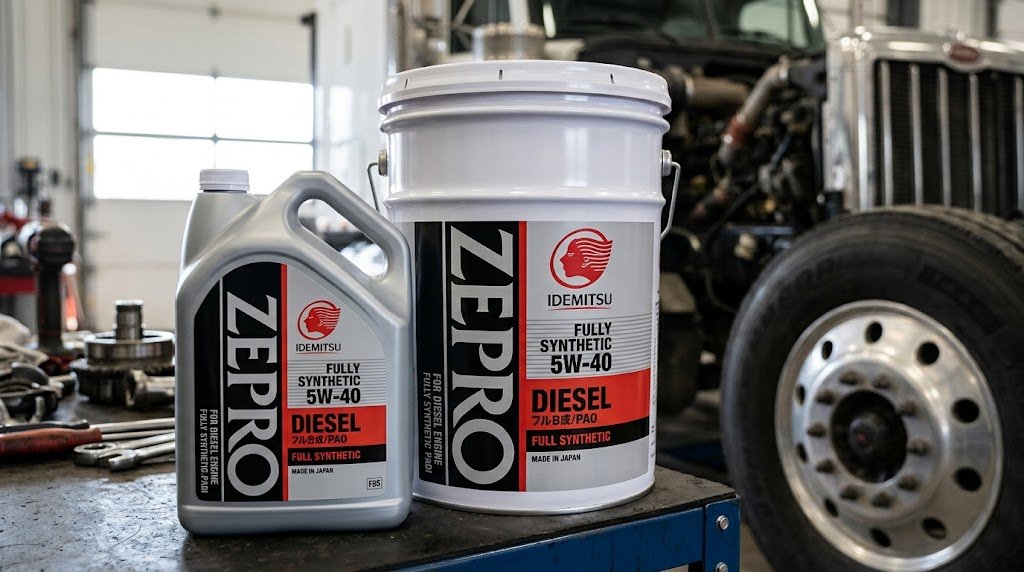
Idemitsu is one of the largest petroleum and specialty chemical companies in Japan, and its Zepro Diesel line represents serious heavy-duty engineering rather than a rebranded passenger car product with a new label. The 5W-40 full synthetic is designed for modern, high-output diesel engines that run hot, work hard, and depend on an oil that stays stable through extended operating cycles.
The formulation focuses on three areas where diesel engines are most vulnerable: oxidative thickening from sustained high-temperature operation, soot-induced viscosity increase from combustion byproducts, and wear at startup before oil pressure fully builds. Idemitsu addresses all three through its base stock selection and additive chemistry, producing an oil that maintains consistent viscosity and film strength across a full service interval rather than degrading steadily from the first hours of use.
Zepro Diesel 5W-40 meets API CK-4 and is compatible with modern emission systems including DPF and EGR-equipped engines. The 5W-40 grade makes it a particularly practical choice in climates with cold winters, where a heavier oil’s sluggish cold-flow characteristics can slow lubrication at startup. For fleet operators looking to diversify beyond the dominant Shell and Mobil options without stepping down in quality, Idemitsu Zepro Diesel is a well-engineered alternative worth evaluating.
Best for: Fleets seeking a full synthetic 5W-40 alternative to dominant brands, and operations in cold-weather environments.
Pros
- Full synthetic formulation handles oxidation, soot, and startup wear effectively
- 5W-40 grade provides strong cold-start protection in low-temperature conditions
- Compatible with DPF and EGR systems on modern diesel platforms
Cons
- Less widely stocked at independent truck stops compared to Shell Rotella or Mobil Delvac
- Idemitsu’s distribution network is stronger on the West Coast than in some interior regions
| Specification | Details |
| Viscosity Grade | 5W-40 |
| Oil Type | Full Synthetic |
| API Rating | CK-4 |
| Key Strengths | Oxidation stability, soot management, cold-start protection |
| Best Use Case | Modern high-output diesel engines, cold-climate fleets, brand diversification |
How to Handle a Semi Truck Engine Oil Change
A semi truck engine oil change should always follow the engine manual, but the basic steps are simple: warm the engine, drain the old oil, replace the filter, refill with the correct oil and quantity, then check for leaks and verify the level after circulation. Cummins stresses using the proper viscosity and specification for the engine and operating conditions.
Real‑World Cost & ROI of Premium Oils for Fleet Owners
Premium oil costs more up front, but it can pay back through longer drains, better wear control, and fewer failures. Mobil directly markets long-drain capability and fuel-economy potential for Delvac 1 ESP, while Volvo has said VDS-4.5-based oils can help enable longer oil drain intervals and lower service cost.
For fleets, the real cost is not just oil. It is downtime. That is why proper oil choice and faster field service matter together.
Why Maintenance and Mobile Truck Service Matter
Even the best semi truck engine oil cannot save an engine if the truck is run low on oil, overheating, or leaking. Temperature spikes, coolant loss, leaks, and warning lights need quick action before damage gets worse. Truck N Trailer Roadside offers 24/7 mobile truck service and mobile truck repair service for trucks and trailers, including emergency roadside help, engine diagnostics, and field repairs.
Simple Semi Truck Maintenance Checklist
The right semi truck engine oil matters, but it works best as part of a full maintenance routine. For a more detailed breakdown, read our Complete Semi Truck Maintenance Checklist for 2026.
Start with these key checks:
- Check engine oil level before each trip
- Inspect for oil, coolant, or fuel leaks
- Monitor oil pressure, engine temperature, and warning lights
- Use the correct CK-4, FA-4, or OEM-approved oil
- Change oil and filters on schedule
- Check coolant, brake, and power steering fluid levels
- Inspect belts, hoses, and battery connections
- Look for uneven tire wear and low tire pressure
- Make sure lights and safety equipment are working
- Address smoke, overheating, or rough performance early
Final Thoughts
For most fleets, the best engine oil for semi trucks starts with the engine maker’s spec, then the duty cycle. CK-4 remains the safe default for many mixed fleets, FA-4 only makes sense where the engine approves it, and OEM specs like Volvo VDS-4.5 or Cummins CES 20086 should always win over guesswork. Premium oils can reduce wear and help uptime, but only if maintenance stays on schedule.
If you want to reduce road failures, combine the right oil with consistent inspections and a reliable mobile truck repair service. Truck N Trailer Roadside offers 24/7 support for fleets that need help without the delay of towing to a shop. Call us at 614-423-6164 to get in touch with our team.
FAQs
How much oil is in a semi truck engine?
It varies by engine. That is why drivers should always check the engine manual before ordering oil or doing a semi truck engine oil change.
Which is the best Volvo semi truck engine oil?
For many Volvo highway engines, the key is using oil that meets Volvo VDS-4.5 or the required current Volvo spec. Volvo’s D13 literature specifically lists SAE 10W-30 VDS-4.5, while Volvo service documents also reference VDS-4 quality requirements for compliant engines.
How often should I change semi truck engine oil?
There is no single interval for every truck. It depends on the engine, duty cycle, oil type, and OEM schedule. Mobil highlights long-drain capability on Delvac 1 ESP, but Cummins also warns not to extend drain intervals beyond recommendations just because the oil is synthetic.
What is a healthy semi truck engine oil temperature?
A normal range is about 200°F to 245°F based on Cummins heavy-duty engine documentation. Oil that runs too cold can be too thick, and oil that runs too hot can thin out and protect less effectively.