Driving a Mack truck for long hours means your cab quickly becomes your workspace, break room, and sometimes even your home. So the air inside it really does matter. The cabin air filter is there to clean the air coming into your HVAC system, trapping dust, pollen, diesel fumes, and road debris before they reach you.
The issue starts when that filter gets dirty or clogged. Usually, you will notice weaker airflow, reduced cooling, dust settling inside the cab, or even a musty smell when the HVAC runs. The tricky part is that the Mack cabin air filter is not in the same place on every model. On an Anthem, Granite, or Pinnacle, and depending on the year, it can be located in different spots, which can make it a bit confusing to find at first.
The fix is simple once you know where to look on your specific truck. A proper cabin air filter replacement can help restore strong airflow, improve air quality inside the cab, and keep the HVAC system operating efficiently for a more comfortable ride.
What Does a Mack Cabin Air Filter Do?
The Mack cabin air filter works as the first line of defense for the air inside your truck. Every time your HVAC system pulls outside air into the cab, that air passes through the filter media first.
The filter traps particles that would otherwise circulate through your cab. This includes dust from dirt roads, pollen during spring and summer months, diesel soot from other trucks, and fine debris from construction sites. Some higher-quality filters also capture odors and chemical fumes.
For drivers who spend 10 to 14 hours daily behind the wheel, this filtration directly affects respiratory health. According to the American Lung Association, prolonged exposure to airborne particulates increases the risk of respiratory conditions and can worsen existing allergies or asthma.
Commercial truck drivers face elevated exposure levels compared to general motorists because of the environments they operate in and the hours they spend on the road.
Beyond health benefits, a clean cabin filter keeps your HVAC system running efficiently. When the filter stays clear, your blower motor does not need to work as hard to push air through the system. This reduces wear on HVAC components and helps maintain consistent heating and cooling performance.
How to Know Your Mack Cabin Air Filter Needs Replacing?
Recognizing these signs early prevents bigger problems down the road on mack cabin air filter replacement.
- Weak airflow from the vents is the most common sign of a clogged cabin air filter. Even on high fan speed, you may feel very little air coming through.
- Dust inside the cab, with the windows closed, also points to a worn-out filter that’s no longer trapping particles properly.
- A musty smell when you turn on the HVAC usually means moisture and debris are trapped in the filter, leading to mold or mildew buildup.
- Poor AC cooling can happen when airflow is restricted, even if the system itself is working fine.
- Foggy windows that take a long time to clear are another sign, since a dirty filter reduces airflow to the defrost system.
According to the EPA Air Quality Standards, fine particulate matter, such as dust and diesel soot, can penetrate deep into the lungs and affect respiratory health over time.
Mack Cabin Air Filter Location by Truck Model
Finding your Mack cabin air filter location depends on which Mack you drive. Each model has its own HVAC layout, and even within the same model line, different years might have slight variations.
Mack Anthem Cabin Air Filter Location
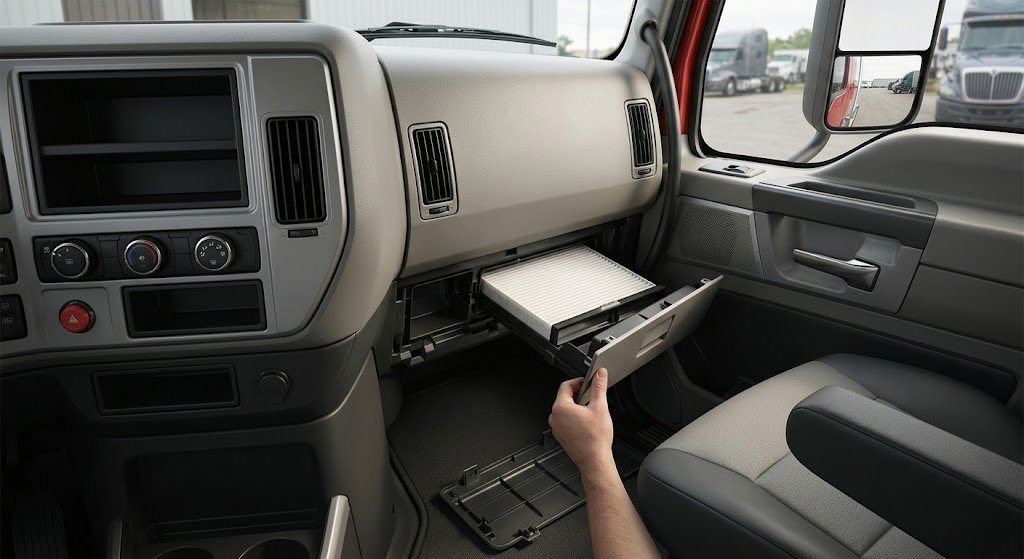
The Mack Anthem places its cabin air filter on the passenger side of the cab, housed within the HVAC assembly beneath the dashboard. This positioning follows standard practices for modern highway trucks, placing the filter where technicians can access it without major disassembly.
To reach the Anthem cabin air filter, you need to work from inside the cab on the passenger side. Look for an access panel in the lower dash area near the passenger footwell. Some model years require removing multiple screws and trim panels to expose the filter housing.
Once you remove the access panel, you will see the HVAC box that contains the filter. The filter cartridge slides out of its housing after releasing any clips or tabs that hold it in place. Take note of which direction the filter faces before removing it so you can install the new one correctly.
Mack Pinnacle Cabin Air Filter Location
The Mack Pinnacle cabin air filter sits behind a service panel on the passenger side of the cab. Like the Anthem, this filter is part of the HVAC housing system located in the lower dash area.
Accessing the Pinnacle filter involves removing the HVAC access panel on the passenger side. Depending on your specific model year, you might also need to remove a side trim panel to create enough working room. The filter compartment houses a rectangular filter cartridge that can be pulled out once the housing is opened.
Some Pinnacle models from earlier production years have the filter positioned deeper within the HVAC assembly. This can require a bit more disassembly to reach. A flashlight helps when working in these tighter spaces.
Mack Granite Cabin Air Filter Location
The Mack Granite positions its cabin air filter within the passenger side HVAC housing, similar to other Mack models. However, the Granite has some unique considerations due to its vocational truck design and the various cab configurations available.
Newer Granite trucks follow the standard approach with a filter cartridge accessible through an interior service panel near the passenger footwell. Older Granite models might use a different filtration approach, with some featuring screen-type filtration elements positioned near the evaporator or heater core rather than a traditional pleated filter cartridge.
Certain Granite configurations require removing the center console area and side panels to gain adequate access to the filter housing. The filter position near the HVAC assembly and ductwork means you might encounter more obstacles in the work path compared to highway truck models.
Truck Model Cabin Air Filter Location
The Mack Vision places its cabin air filter beneath the dashboard area on the passenger side, positioned near the HVAC evaporator assembly. Access is through an interior service panel, similar to that on other Mack models.
Vision models require removing the appropriate panel to expose the filter housing. The filter sits within the airflow path where outside air enters the HVAC system. Some Vision trucks have the filter oriented vertically rather than horizontally, which affects how you remove and install the replacement.
Mack CH Series Cabin Air Filter Location
The CH Series trucks house the cabin air filter within the HVAC box below the dashboard. These older trucks have simpler HVAC systems compared to current models, but the filter serves the same function.
Depending on the production year, CH Series filters might be installed in the air intake duct rather than a dedicated filter housing. This placement was common in trucks built during the era when cabin filtration was becoming standard, but before manufacturers standardized component locations.
How to Replace a Mack Cabin Air Filter?
Replacing your Mack cabin air filter takes about 15 to 30 minutes once you know where to find it. The process requires basic hand tools and a replacement filter that matches your truck model.
Gather these items before starting the Mack air filter replacement:
- Phillips head screwdriver
- Flathead screwdriver
- Trim removal tool or plastic pry bar
- Flashlight
Step 1: Park the Truck and Shut Everything Down
Park on a flat surface, set the parking brake, and turn off the engine. Switch off the HVAC system and wait a few minutes before starting. This helps prevent dust or debris from being pulled into the system while the filter housing is open.
Step 2: Find the Cabin Air Filter
Go to the passenger side and locate the cabin air filter access panel. On most Mack trucks, it’s found near the lower dashboard or footwell area. Use a flashlight if needed to see how the panel is secured.
Step 3: Open the Filter Housing
Remove any screws or clips holding the access panel in place. Keep the hardware somewhere safe so it doesn’t get lost. Once the panel is off, open the filter housing and expose the filter.
Step 4: Take Out the Old Filter
Before removing the filter, note the direction of the airflow arrows printed on the frame. Carefully slide the old filter out and check the housing for any loose dirt or debris. Wipe the area clean if necessary.
Step 5: Install the New Filter
Match the airflow direction on the new filter to the one you removed. Slide it into place and make sure it sits evenly inside the housing with no gaps around the edges.
Step 6: Put Everything Back Together
Close the filter housing, reinstall the access panel, and secure any screws or clips. Start the truck and turn on the HVAC system. Check the airflow at different fan speeds to make sure everything is working properly.
How To Replace Mack Truck Cabin, AC Air Filter
Replacement intervals depend on your operating conditions. A truck running mostly clean highway miles needs filter changes less frequently than one working dusty construction sites daily.
Normal Highway Operation
Mack truck air filters, primarily used on interstate routes in average conditions, should have cabin filters inspected every 15,000 to 20,000 miles. Replacement typically falls within the 20,000-30,000-mile range for these applications.
Construction and Dusty Job Sites
Vocational trucks working construction sites, quarries, or unpaved roads face much higher particulate loads. These applications require inspection every 5,000 to 10,000 miles, with replacement often necessary at 10,000 to 15,000-mile intervals.
Severe Service Conditions
Trucks operating in extreme conditions need the most frequent attention. This includes vehicles working in landfills, mining operations, agricultural applications, or anywhere with constant airborne debris. Monthly inspections make sense for these Mack truck air filters, with replacement whenever the filter shows heavy loading.
Common Problems Caused by a Dirty Mack Cabin Air Filter
Neglecting your cabin filter leads to cascading issues that affect comfort, health, and the longevity of your HVAC system.
Weak Airflow From Vents
A clogged filter restricts airflow through the entire HVAC system. Your blower motor works harder trying to push air through the blocked filter media. You feel less air at the vents even with the fan on high.
Poor AC Performance
Reduced airflow across the evaporator means your AC cannot transfer heat effectively. The system runs constantly but never cools the cab properly. This wastes fuel and puts extra strain on AC components.
Increased Dust Inside Cab
When a filter becomes fully saturated, particles start to bypass the filter element. Dust accumulates on dashboard surfaces, seats, and electronics, even with windows closed.
Unpleasant Odors
Organic material trapped in the filter, combined with moisture, creates ideal conditions for mold and mildew. These organisms produce musty odors that circulate throughout the cab whenever the HVAC runs.
Extra Strain on HVAC Components
Your blower motor draws more current when pushing against a restricted filter. This generates excess heat in the motor windings, shortening the motor’s lifespan. A blower motor repair or service costs significantly more.
Browse a Mack granite cabin air filter location and keep your cab fresh, clean, and comfortable.
Comparison Table: Cabin Air Filter vs Engine Air Filter
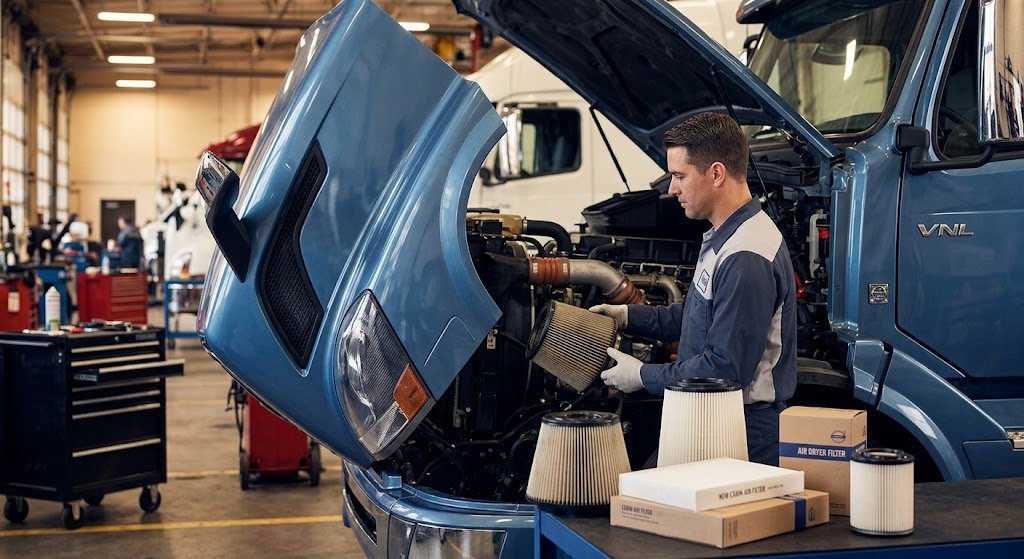
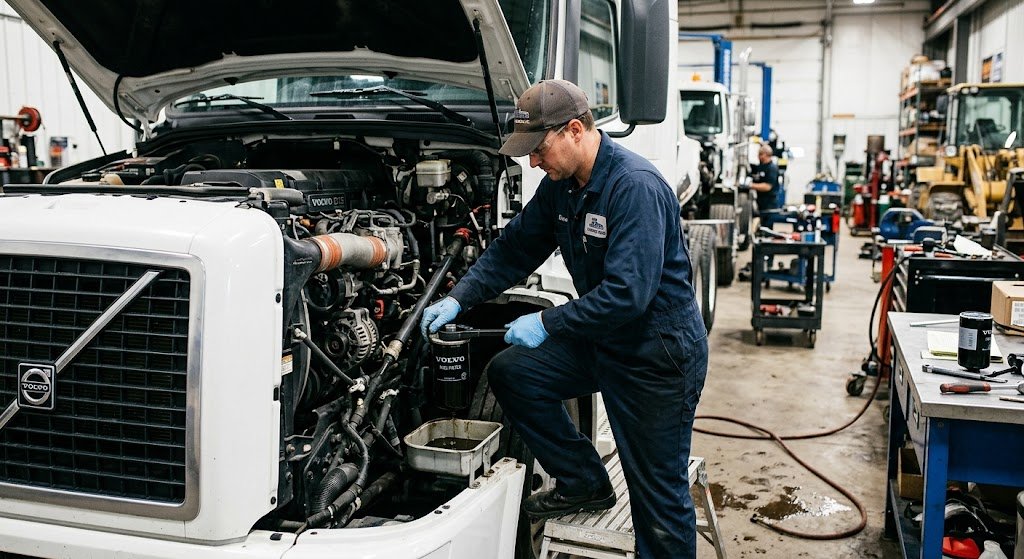
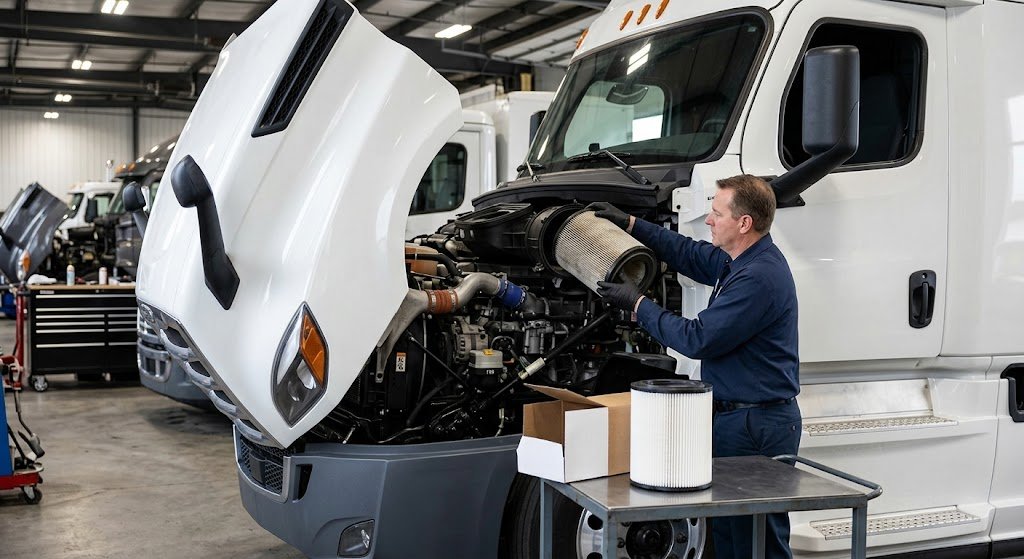
These two filters serve completely different functions despite similar names. Confusing them leads to mistakes during maintenance.
| Feature | Cabin Air Filter | Engine Air Filter |
| Primary Function | Filters air entering the driver’s compartment through the HVAC system | Filters combustion air entering the engine intake system |
| Location | Behind the passenger-side dashboard panel or the HVAC housing | Engine bay, typically mounted on top or side of engine block |
| What It Protects | Driver and passenger health and comfort | Internal engine components (cylinders, pistons, bearings) |
| Particles Filtered | Dust, pollen, diesel soot, road debris, odors | Sand, dirt, insects, construction dust, airborne contaminants |
| Impact on Engine Performance | No direct impact on engine operation | Direct impact on horsepower, torque, and fuel efficiency |
| Impact on Fuel Economy | No impact on fuel consumption | Significant impact—dirty filter increases fuel consumption by 5-10% |
| Replacement Interval (Normal Conditions) | Every 12,000 to 15,000 miles or annually | Every 15,000 to 30,000 miles, depending on driving conditions |
| Replacement Interval (Dusty Conditions) | Every 5,000 to 8,000 miles | Every 10,000 to 15,000 miles |
| Symptoms When Dirty | Weak airflow, musty odors, dust in the cab, poor AC performance | Reduced power, sluggish acceleration, rough idle, increased emissions |
| DIY Replacement Difficulty | Easy to moderate (requires panel removal) | Easy to moderate (depends on engine layout) |
Both filters deserve attention during routine maintenance. Check your engine air filter on the same schedule. Replace whichever filter shows visible dirt or debris accumulation.
Which Mack Trucks Use Cabin Air Filters?
Most modern Mack trucks include cabin air filtration as standard equipment. This covers:
- Mack Anthem: Full cabin filtration standard
- Mack Pinnacle: Cabin filtration included
- Mack Granite: Filtration systems vary by cab configuration
- Mack Vision: Cabin filter equipped
- Mack CH Series: Filtration availability depends on production year and options
Older trucks might not have factory-installed cabin filtration. Some operators have retrofitted filtration systems to improve cab air quality.
OEM vs Aftermarket Mack Cabin Air Filters
Choosing between factory filters and aftermarket options involves tradeoffs in cost, quality, and availability.
OEM Filters
Factory Mack filters guarantee exact fitment and filter media that meet original specifications. These filters slide into housings without modification and seal properly to prevent bypass. OEM filters typically cost more than aftermarket options.
Aftermarket Filters
Third-party filters from reputable brands are often priced lower while still providing adequate filtration. Quality varies significantly between manufacturers. Some aftermarket filters match OEM performance, while others use inferior filter media or have dimensional issues.
Which Option Is Best?
For most operators, quality aftermarket filters from established brands provide good value without sacrificing performance. Avoid bargain filters from unknown sources. Poor fitment leads to bypass problems that defeat the purpose of filtration entirely.
Found your Mack truck cabin air filter location? The next step is choosing the right replacement. Shop dependable cabin air filters built for Mack trucks.
When to Call for Mobile Truck Repair
If your Mack truck air filter shows restricted airflow even after installing a new filter, something else in the HVAC system might be failing. Blower motor problems, blocked evaporator coils, or ductwork obstructions all require diagnosis beyond filter replacement.
HVAC systems that produce strange noises, fail to switch modes correctly, or have electrical issues benefit from professional attention. These Mack air filter problems involve components beyond the filter that require specialized knowledge to troubleshoot.
Emergency breakdowns involving HVAC failures on hot summer days or freezing winter nights need immediate response. Waiting for the shop to be available is not an option when temperatures make the cab unbearable or unsafe.
Why Choose Truck N Trailer Roadside?
Truck N Trailer Roadside brings mobile truck repair directly to your location throughout Columbus, Ohio, and the surrounding areas. When HVAC problems strand you on the highway or at a loading dock, mobile repair eliminates the need for towing and gets you moving faster.
Experienced technicians arrive with tools and equipment to diagnose HVAC issues on-site. From blower motor replacements to AC system repairs, mobile service handles problems that would otherwise require expensive tows to stationary shops.
Available 24/7, Truck N Trailer Roadside responds quickly to emergency calls. Whether you face a cabin filter housing that will not open, a blower motor that quit working, or an AC that stopped cooling on a 95-degree day, professional mobile repair provides solutions where you are.
Conclusion
The Mack air filter protects both your health and your HVAC system. Finding it requires knowing where to look on your specific truck model. Anthem, Pinnacle, and Granite trucks all position the filter on the passenger side within the HVAC housing, but exact access points vary.
Understanding where the filter is located and how to access it can help restore proper airflow, improve air quality inside the cab, and support efficient HVAC operation. When airflow or HVAC issues persist, professional mobile repair may be needed to diagnose and address the underlying problem.
Contact Truck N Trailer Roadside at 614-423-6164 for 24/7 mobile truck repair services throughout Columbus and Central Ohio.
FAQs
Where is the Mack cabin air filter located?
The Mack cabin air filter is located on the passenger side of the cab, typically housed within the HVAC assembly beneath or behind the dashboard. Access comes through a removable panel in the lower dash area near the passenger footwell.
Where is the Mack Anthem cabin air filter location?
The Mack Anthem cabin air filter sits inside the HVAC housing beneath the passenger-side dashboard. You reach it by removing an access panel near the passenger footwell and opening the filter housing in the HVAC box.
Where is the Mack Pinnacle cabin air filter location?
The Mack Pinnacle positions its cabin air filter behind a service panel on the passenger side of the lower dash area. Some model years require removing additional trim pieces to create enough clearance for filter access.
Where is the Mack Granite cabin air filter location?
The Mack granite cabin air filter is located within the passenger side HVAC housing near the evaporator core. Access methods vary by cab configuration, with some trucks requiring the removal of the center console and side panels.
Can I replace a Mack truck cabin air filter myself?
Yes. Replacing the cabin air filter requires only basic hand tools and takes 15 to 30 minutes. The process involves removing an access panel, sliding out the old filter, and installing a new one with the correct airflow orientation.