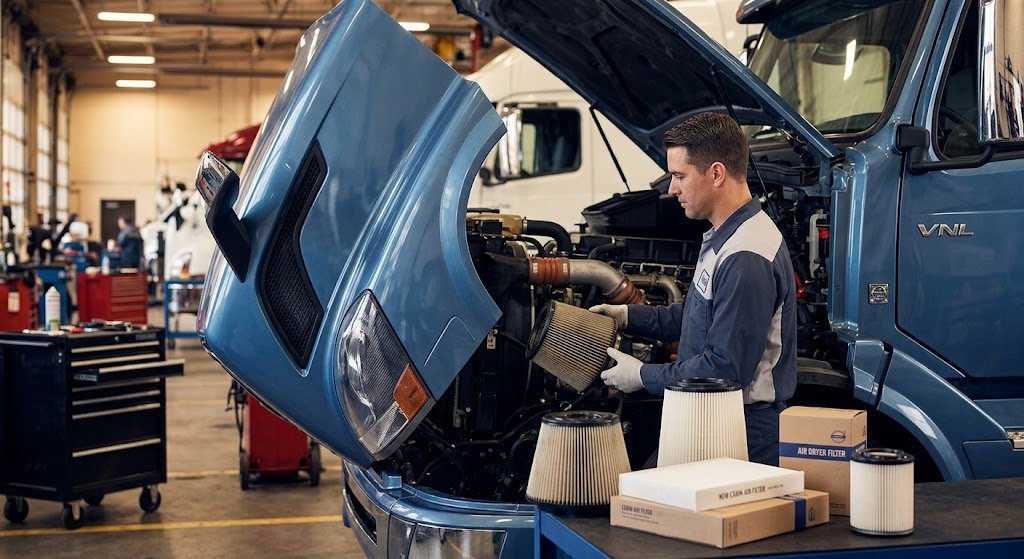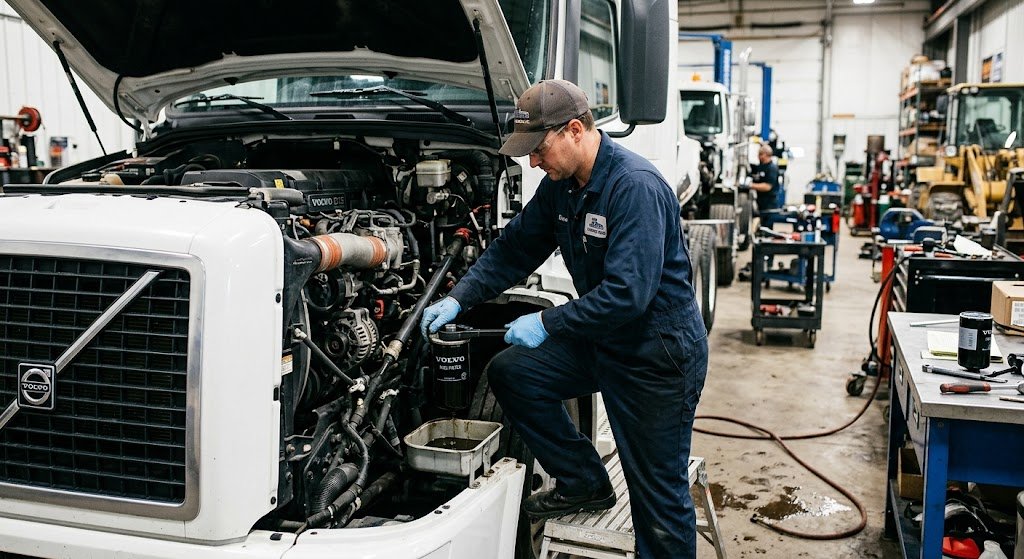
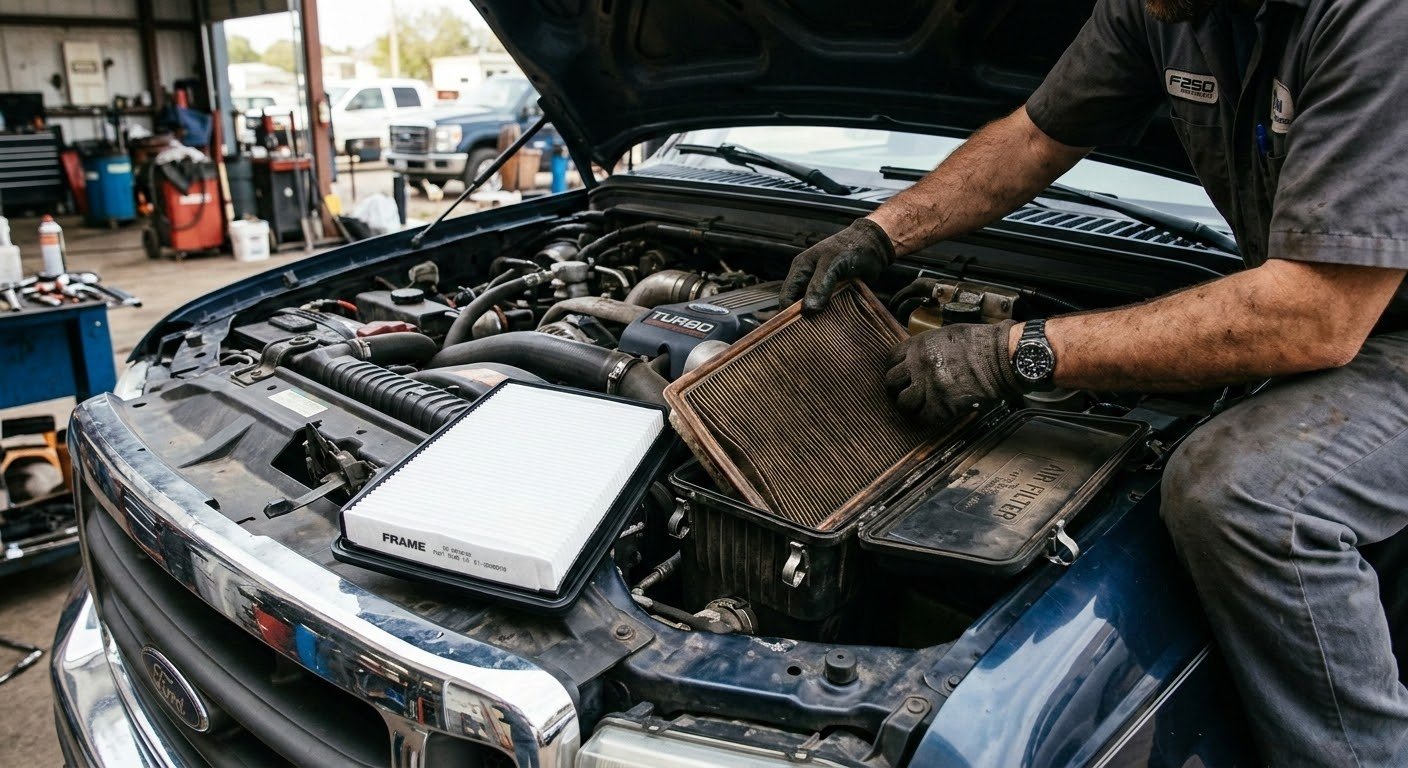
Whether you run a single truck or manage a fleet, knowing how often to change air filters matters more than many drivers realize. A dirty filter restricts airflow, hurts fuel economy, and can contribute to sluggish performance, black smoke, and added engine wear. In a working truck, that can quickly turn into lost time and expensive downtime.
This guide breaks down realistic replacement intervals, warning signs, a simple inspection process, and when to call for professional help.
What a Truck Air Filter Does and Why It Matters
Your engine air filter is the first line of defense against dust, dirt, and airborne debris entering the intake system. Its job is simple but critical: let enough clean air into the engine for efficient combustion while blocking contaminants that can damage internal components. Air filters should be changed according to the chassis manufacturer’s recommendation, or more often in dusty conditions, and warns that loose hoses or piping can allow dirt into the engine and lead to major damage.
A clean semi truck air filter supports better airflow, which helps maintain power, throttle response, and fuel efficiency. Clogged filters may lead to reduced acceleration, reduced power under load, increased fuel consumption, and even overheating risk in heavy vehicles.
How Often to Change Air Filter in Truck
There is no single mileage number that fits every truck, but a practical rule of thumb for many on-road applications is to inspect regularly and expect replacement somewhere around 15,000 to 30,000 miles, depending on operating conditions.
For heavy-duty and vocational use, the real answer is condition-based: route type, dust exposure, idling, and stop-and-go use can shorten filter life significantly. Our technicians advise changing the filter more frequently when operating in dusty conditions rather than relying only on a fixed interval.
Standard driving conditions
If your truck is mostly running highways and paved urban routes, the filter usually lasts longer. In this type of service, regular inspections during preventive maintenance often catch issues before they affect performance. Even then, it is smart to check the filter visually instead of assuming it is fine based on mileage alone.
Heavy-duty or dusty conditions
If your truck regularly runs through construction zones, gravel yards, agricultural routes, or other dusty environments, the replacement interval should be shorter. Dust loading can build much faster than many operators expect, which is why heavy-duty guidance consistently recommends more frequent inspection and earlier replacement under dirty conditions.
Always follow the manufacturer’s manual
The safest answer to “How often to change air filter in truck?” is this: use your owner’s manual as the baseline, then shorten the interval if your real-world conditions are harsher than normal. Also, do not depend only on the air restriction indicator. Cummins specifically says it should not be solely relied upon for replacement decisions.
Signs It Is Time to Replace Your Semi Truck Air Filter
The truck gives you signs when your filter starts to fail, including:
- A clogged filter can cause decreased engine performance, including sluggish acceleration, reduced pulling power, and weaker response when climbing or hauling. It can also trigger unusual engine sounds such as coughing, popping, or vibration.
- Another common sign is decreased fuel efficiency. When airflow drops, combustion becomes less efficient, and the engine may burn more fuel to deliver the same output.
- Some trucks may also show visible black exhaust smoke, which can happen when the air-fuel mixture is thrown off by insufficient intake air.
- On newer trucks, a clogged intake system may even contribute to a check engine light.
- Finally, there is the obvious visual clue: if the filter element looks heavily darkened, dusty, or packed with debris, it is time to replace it instead of trying to stretch one more trip out of it.
Step-by-Step Air Filter Inspection Checklist
You do not need a full shop teardown just to perform a basic check. Here is a simple inspection process:
1. Park safely and let the engine cool
Set the brakes, park on stable ground, and shut the truck down fully before opening the housing.
2. Locate the air filter housing
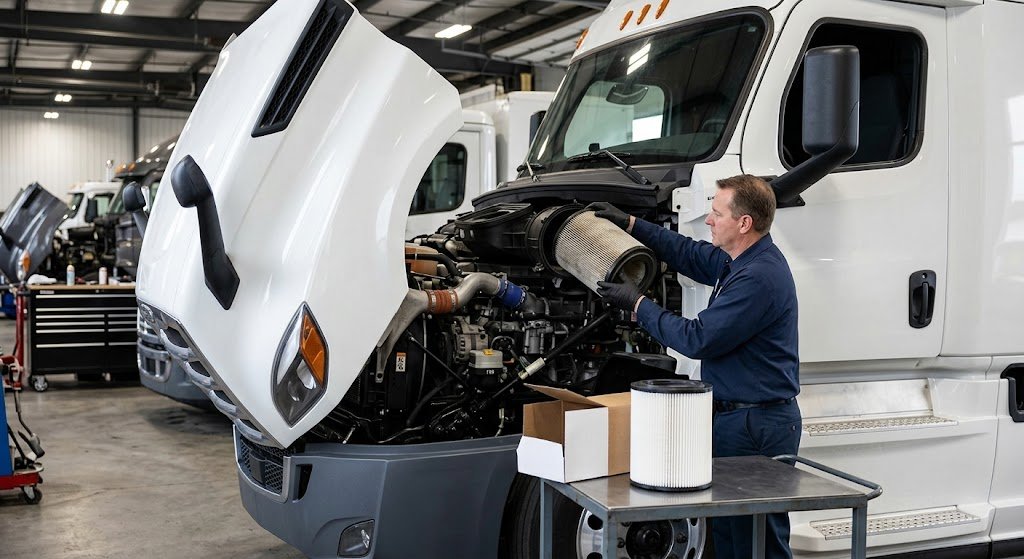
Most trucks place the engine air filter in a housing connected to the intake tubing. Your manual will show the exact location for your make and model.
3. Open the housing carefully
Release the fasteners or cover and remove the filter without knocking debris into the intake path.
4. Inspect the filter element
Look for heavy dirt loading, dark discoloration, packed debris, torn media, moisture damage, or collapsed pleats.
5. Inspect the housing and seals
Check for cracked housings, damaged clamps, poor sealing surfaces, or loose intake connections. Cummins warns that loose or broken clamps, hoses, or piping can allow dirt entry into the engine.
6. Replace if in doubt
If the filter looks heavily contaminated or damaged, replace it. Heavy-duty engines are too expensive to risk over a questionable filter.
7. Reassemble correctly
Install the new filter properly, confirm the seal is seated, and close the housing securely.
DIY vs. Professional Replacement
Changing a semi truck air filter can be simple if the housing is easy to reach and you have the right part. For routine maintenance, many owner-operators can handle a quick swap.
However, it’s better to call a technician if access is tight or if there are signs of bigger issues like leaks, damaged parts, or warning lights. A professional can check the full intake system, make sure everything is sealed correctly, and prevent small problems from turning into costly repairs.
Why Call Truck N Trailer Roadside
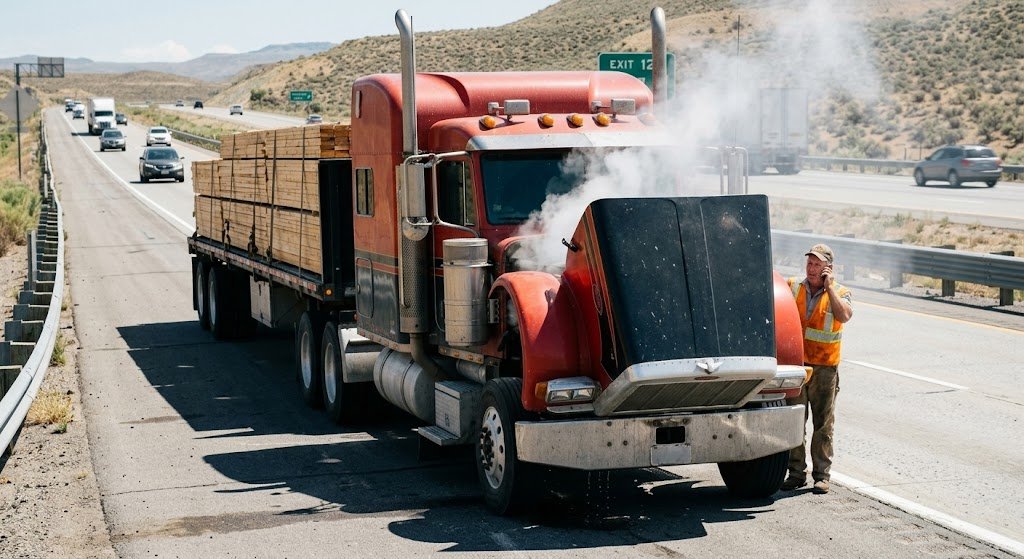
When a truck is down, convenience is not a luxury. It is the difference between a quick fix and hours of lost revenue. Truck N Trailer Roadside offers Mobile Truck Repair Service and emergency roadside support 24/7 for semi trucks, commercial trucks, heavy-duty trucks, and trailers across Columbus and the surrounding region. Their on-site mobile mechanic service is designed to eliminate towing when possible and reduce downtime by bringing repairs directly to the truck.
That matters in real-world situations like these:
- Your truck feels down on power during a run, and you do not want to gamble on making it back to the yard. Their mobile team can come out and diagnose engine-related issues on site.
- You are managing multiple units and need a partner who can handle roadside breakdowns, routine maintenance, and fleet support. Truck N Trailer Roadside states that it supports emergency breakdowns, mobile repairs, routine maintenance, and comprehensive fleet service.
- You want one provider for more than just filters. Their services include emergency roadside assistance, mobile tire services, brake repairs, engine diagnostics, electrical repairs, and fuel system services.
You can explore our full service lineup here: Truck N Trailer Roadside Services.
Best Maintenance Practices to Extend Filter Life
Do not wait for a major symptom. Add filter checks to your preventive maintenance routine and inspect more often if routes change or weather gets dusty. Also, pay attention to the intake system as a whole. Even a brand-new filter cannot protect the engine if the housing, clamps, or hoses are leaking.
Conclusion
A clean semi truck air filter is one of the simplest ways to protect performance and reduce avoidable downtime. If you want a dependable mobile truck repair service that can inspect, diagnose, and repair trucks on site, Truck N Trailer Roadside provides exactly that. Call us at 614-423-6164 to discuss your needs.
FAQ
How often should a semi truck air filter be changed?
It depends on the truck and the operating environment, but the safest approach is to follow the manufacturer’s schedule and shorten the interval in dusty service. Cummins specifically advises more frequent replacement when operating in dusty conditions.
Does driving condition affect air filter replacement frequency?
Yes. Highway driving is generally easier on the filter than construction routes, gravel yards, or other high-dust environments. Heavy dust loading shortens filter life and calls for more frequent inspection.
Can a dirty filter damage my engine?
Yes. Restricted airflow can hurt performance and fuel economy, and a poorly sealed or neglected intake system can allow contaminants into the engine. Cummins warns that dirt entry through loose or broken components can require engine overhaul.
What are the most common signs of a bad semi truck air filter?
Common signs include slow acceleration, reduced power under load, unusual engine sounds, black exhaust smoke, lower fuel efficiency, and, in some cases, a check engine light.