Semi truck brake problems are not just annoying; they are dangerous. A loaded semi can take a long distance to stop, and even small brake issues can turn into a serious crash if you keep driving. The good news is that most brake problems give warning signs first, and many can be fixed quickly if you catch them early. This 2026 guide covers the most common semi truck brake issues, what they look like, what usually causes them, and what to do next.
Why Semi Truck Brake Problems Are So Dangerous
Semi trucks are heavy, and heavy vehicles need more force and more distance to stop. Even under test standards for air-braked truck tractors, stopping distances at highway speed are measured in hundreds of feet, which shows how much room a truck needs even when everything is working correctly.
When brakes are weak, out of adjustment, or overheating, stopping distance can grow fast. That puts the driver, the load, and everyone around the truck at risk. That is why semi truck brake repair should never be delayed if you notice a real warning sign.
How Semi Truck Brakes Work
Virtually all semi trucks have air brakes. Instead of brake fluid like a car, the truck uses compressed air. Air pressure fills the system, and when you press the brake pedal, air pushes parts in the brake chamber that apply the brakes at the wheels.
Air pressure matters because, without enough pressure, the semi truck air brakes may not apply correctly. According to brake safety guides, pressure build-up is a key sign the system is working normally.
10 Common Semi Truck Brake Problems and Their Fixes
1. Low Air Pressure in the Brake System
Signs: Low air warning, slow pressure build, weak braking.
Common causes: Air leak, failing compressor, bad governor, moisture issues.
Fix: Stop and check for obvious leaks and damaged hoses. If pressure won’t build or keeps dropping, do not drive, call emergency truck brake repair.
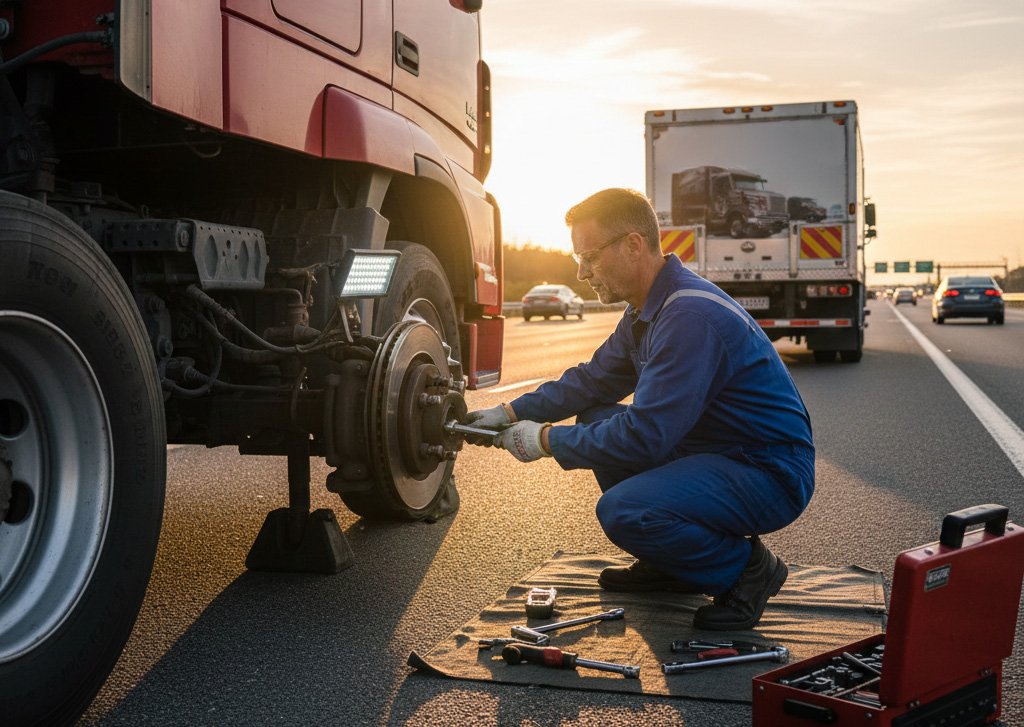
When to call mobile brake repair in Columbus: If your air pressure won’t reach normal range or drops quickly after building, it’s safer to get a mobile truck repair service on-site.
2. Worn Semi Truck Brake Pads or Shoes
Signs: Grinding, squealing, longer stopping distance, uneven braking.
Common causes: Normal wear, heavy loads, lots of stop-and-go routes.
Fix: Replace worn semi truck brake pads (for disc systems) or semi truck brake shoes (for drum systems). Don’t wait, worn friction material can damage rotors or a semi truck brake drum, raising repair cost.
ALSO READ: How to Adjust Semi Truck Brakes: Step-by-Step Guide
3. Semi Truck Brake Chamber Failure
Signs: Brakes for semi truck feel delayed, air leak near wheel area, one wheel not braking right.
Common causes: Ruptured diaphragm, loose clamp, internal failure.
Fix: Brake chambers should be inspected and replaced by a qualified tech. If you hear hissing near a chamber, it’s a “pull over and call” situation.
4. Semi Truck Brake Drums or Rotors Overheating
Signs: Burning smell, smoke, brake fade, vibration, loss of stopping power.
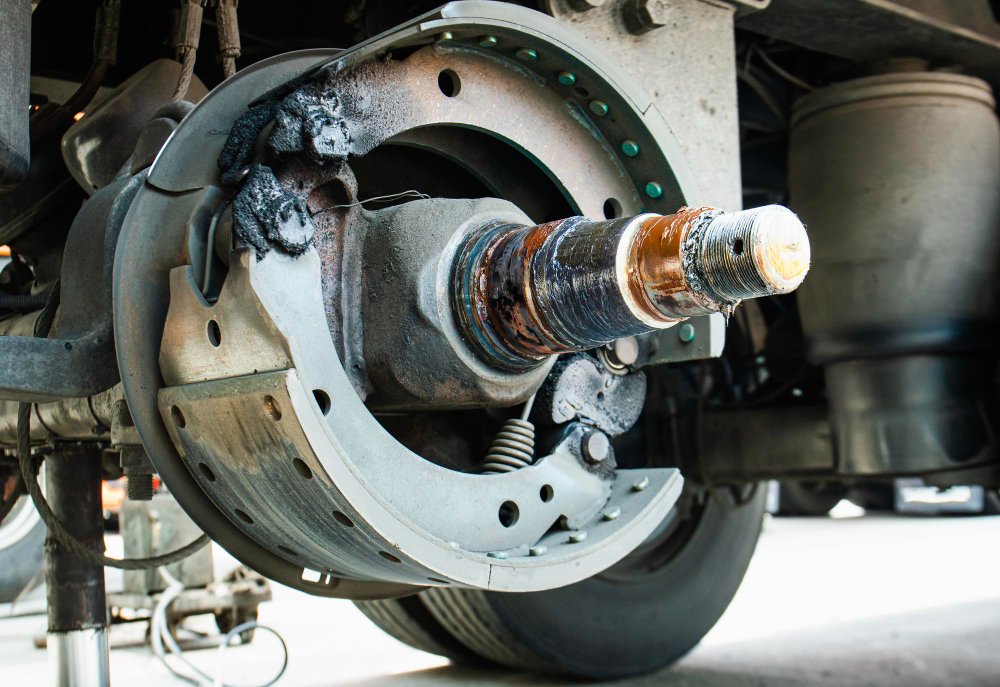
Common causes: Riding brakes downhill, seized components, poor adjustment, heavy loads. Overheating and warped drums are widely cited as common heavy-duty brake issues.
Fix: Safely stop and let brakes cool. Do not spray water on hot brakes. After cooling, the system should be inspected for dragging brakes, out-of-adjustment parts, and damaged brake drums for semi trucks.
5. Air Leaks in Brake Lines
Signs: Hissing sound, pressure dropping, warning light, weak brakes.
Common causes: Cracked hoses, loose fittings, worn seals.
Fix: A tech will locate the leak, replace the damaged line or fitting, and test air pressure build and hold. If you suspect a leak, don’t gamble, call mobile brake repair in Columbus or your nearest service area.
6. Slack Adjuster Problems
Signs: Uneven braking, pulling to one side, longer stopping distance, poor feel.
Common causes: Out-of-adjustment brakes, worn components, issues with automatic slack adjusters. Proper adjustment is critical for air brakes, and pushrod stroke checks are part of formal inspection standards.
Fix: This needs a brake inspection and adjustment to spec. If stroke is out of limits, the truck can be placed out of service under standard criteria.
7. ABS Malfunction
Signs: ABS light on, wheel lockup risk, reduced stability in hard braking.
Common causes: Bad wheel speed sensor, damaged tone ring, wiring issues.
Fix: Scan and diagnose the ABS system, then repair sensors or wiring. Many commercial vehicles must meet ABS requirements.
8. Brake Contamination (Oil, Grease, Water)
Signs: Reduced braking power, pulling, slipping, strange smell.
Common causes: Leaking hub seal, improper lubrication, water exposure, road grime. Contamination is a known cause of reduced braking performance in heavy equipment and trucks.
Fix: Find and fix the leak first, then clean/replace contaminated shoes or pads. Contaminated friction parts often must be replaced, not wiped off.
9. Frozen Brakes in Cold Weather
Signs: Brakes won’t release, wheels drag, trucks won’t roll freely.
Common causes: Moisture in air tanks/lines freezing, poor air dryer performance.
Fix: Follow safe cold-weather procedures and have the air dryer and moisture control system checked. Moisture management is part of basic air brake safety and pressure system health.
10. Complete Brake Failure
Signs: Brake pedal feels wrong, brakes don’t slow the truck, severe warning alarms.
What to do immediately: Stay calm, increase following distance, use engine braking, and move to a safer spot if possible. Call emergency roadside help right away because this is a life safety issue.
Fix: This is not a DIY situation. A qualified tech must diagnose the air system, chambers, lines, and wheel-end parts before the truck moves again.
How to Fix Brake Problems in Semi Trucks
Fixing Low Air Pressure Issues
Start with the basics: air build time, pressure stability, and leaks. If pressure won’t build or drop fast, call for emergency truck brake repair.
Replacing Worn Brake Pads or Shoes
If you hear grinding or braking feels weak, don’t push your luck. Worn semi truck brake pads or semi truck brake shoes can damage drums/rotors and increase stopping distance. Getting the parts replaced early is usually cheaper than repairing semi truck brake drums or wheel-end damage.
Repairing Air Leaks in Brake Lines
Air leaks can start small and quickly become dangerous. A mobile technician can pressure-test, find the leak, replace hoses or fittings, and confirm the system holds pressure before you get back on the road.
Fixing ABS and Electrical Brake Issues
ABS lights matter. ABS is part of the braking safety system required for many commercial vehicles, and a warning light is a sign to diagnose sensors and wiring before conditions get worse.
Emergency Fixes for Brake Failure
If brakes stop working, your job is to get safe and get help. Pull over as safely as possible, use engine braking, and call a mobile truck repair service. Don’t try to drive just a little farther with questionable brakes.
Warning Signs Your Semi Truck Brakes Need Immediate Repair
- Brake warning lights (including ABS)
- Hissing or audible air leaks near chambers or lines
- Longer stopping distance than normal
- Truck pulling to one side under braking
- Burning smell, smoke, or fading brakes
- Vibration or shaking during braking
What to Do If Your Semi Truck Brakes Stop Working
Stay calm and focus on control. Ease off the throttle, use engine braking, and steer to a safer area away from traffic if you can. Turn on hazards, set triangles if safe, and call for emergency truck brake repair immediately.
How Regular Brake Maintenance Prevents Breakdowns
Semi truck brake maintenance is the cheapest way to avoid roadside emergencies. Regular checks catch worn shoes, leaking lines, out-of-adjustment slack adjusters, and failing chambers before they turn into brake failure. Formal inspection references include checking pushrod stroke and brake system condition, which shows how important adjustment and component health are.
A simple routine that helps:
- Pre-trip air pressure and leak checks
- Visual look at hoses, chambers, and obvious damage
- Periodic stroke/adjustment checks (shop-level)
- Keeping moisture under control (air dryer/tank draining as instructed)
When to Call a Mobile Semi Truck Brake Repair Service
Call a mobile service when:
- The truck is unsafe to drive
- You’re on the highway or shoulder
- Brakes are overheating or fading
- You suspect air leaks or chamber failure
- It’s late night and you need 24/7 help
If you’re searching for “truck brake repair near me” and you’re in or near Columbus, mobile brake repair can save time and reduce the risk of driving a truck that shouldn’t be moving.
Need Emergency Brake Repair in Columbus?
If you’re dealing with semi truck brake problems, trailer brake issues, or air brake warnings, Truck N Trailer Roadside provides 24/7 emergency truck brake repair, on-site diagnostics, and mobile truck repair services when it’s not safe to drive. Call us at 614-423-6164 to get help fast.
FAQs
What are the most common semi truck brake problems?
The most common problems include air leaks, low air pressure, worn brake shoes or pads, overheating brake drums, and slack adjuster issues. These often show warning signs like hissing, longer stopping distance, or pulling while braking.
How do you fix brake problems in semi trucks?
It depends on the cause, but common fixes include repairing air leaks, replacing worn shoes/pads, correcting adjustment issues, and repairing brake chamber or ABS faults. Because brakes are safety-critical, serious symptoms should be handled by a qualified tech.
Why are my semi truck brakes not working?
Low air pressure, air leaks, brake chamber failure, or severe overheating can all reduce braking power. If your braking feels weak or abnormal, stop safely and get the system checked right away.
Can air leaks cause brake failure?
Yes. Air leaks can reduce pressure and braking force, and leaks near chambers or lines are a serious warning sign that needs immediate attention.
Is mobile brake repair safe and reliable?
Mobile brake repair is a common and safe option when your truck is not safe to drive or you are stuck roadside. The key is using a qualified service that can diagnose, replace parts correctly, and confirm the air system holds pressure before you roll again.
What should I do if my truck brakes stop working?
Stay calm, use engine braking, move to a safer location if possible, turn on hazards, and call emergency roadside help immediately. Do not keep driving with suspected brake failure.
How often should semi truck brakes be checked?
Drivers should do basic checks during pre-trip inspections, and fleets should follow a regular maintenance schedule for deeper inspections and adjustments. Inspection standards emphasize measuring pushrod stroke and checking for air leaks and other brake defects.